
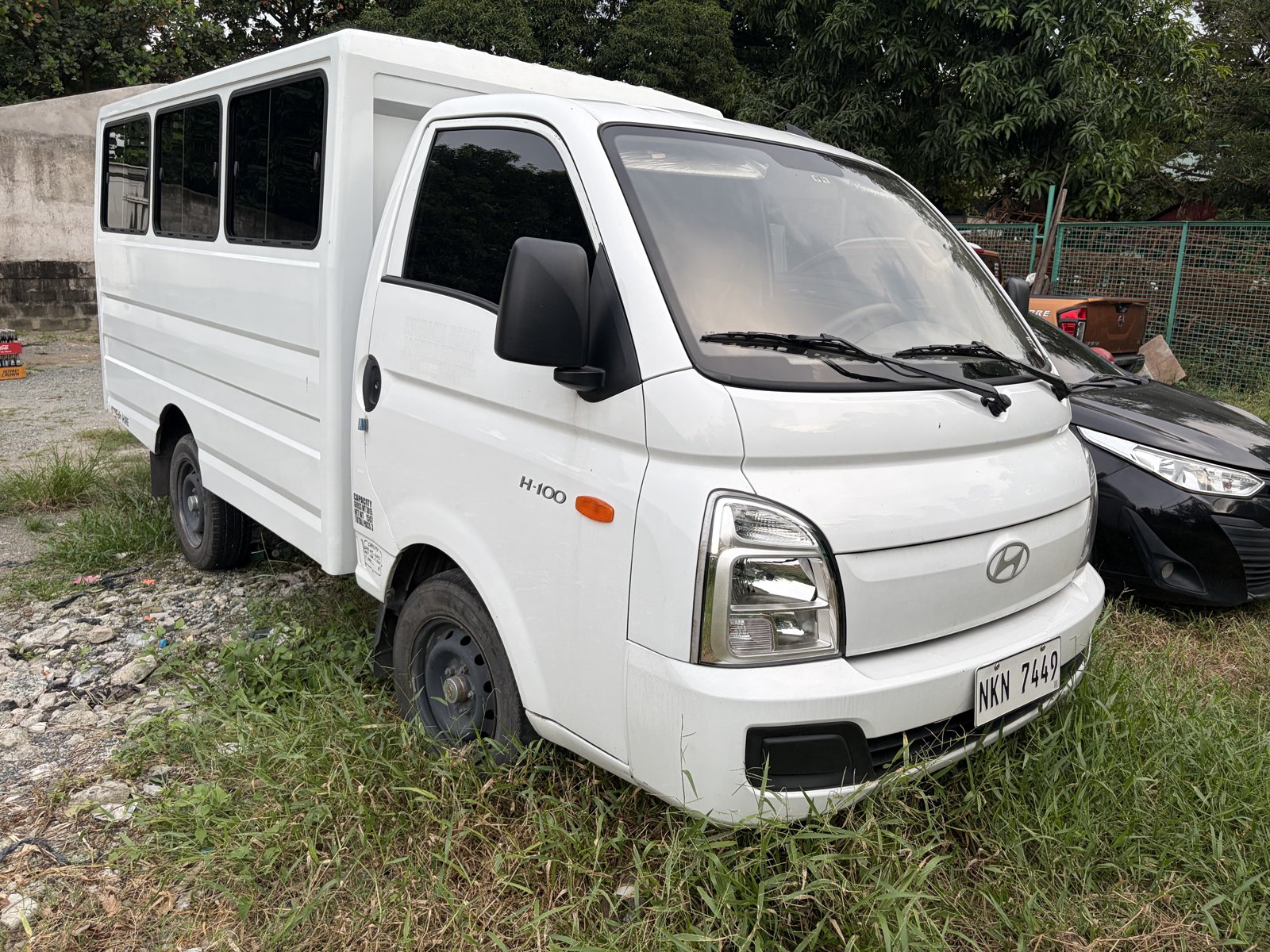
The Hyundai H100 is the light truck you see behind every hardware store, catering kitchen and school-service operator in the Philippines. It is simple, diesel, rear-wheel drive and built to be fitted with whatever body your business needs.
This review is written from the experience of inspecting and selling H100s at our lot in Parañaque. It covers the engine, the body configurations, what a used one costs in October 2026, how it stacks up against the Mitsubishi L300 and Isuzu Traviz, and the checks that separate a good unit from an expensive mistake.
The H100 at a glance
The Hyundai H100 is a one-tonne-class light commercial vehicle with a 2.5-litre CRDi turbo-diesel, a manual gearbox and rear-wheel drive, sold in the Philippines as a bare cab-and-chassis that body builders finish to order.
Semi-bonneted means the engine sits in a short nose ahead of the cabin rather than directly under the front seats. Compared with a full cab-over design like the L300, this gives the H100 a cooler, quieter cabin and more crush space in front of the driver, at the cost of a slightly longer overall length for the same bed.
- Engine: 2.5 CRDi four-cylinder turbo-diesel with an intercooler, Euro 4 on recent units. Hyundai's published output is in the region of 130 PS and 255 Nm, which is strong for this class.
- Transmission: manual only. Recent Euro 4 units use a 6-speed; earlier units used a 5-speed.
- Drive and suspension: rear-wheel drive with leaf springs at the back, which is why it tolerates loading better than any car-based van.
- Seating: three across in the cab; passenger bodies add bench seating behind.
- Payload: roughly a tonne or more depending on the body fitted. The exact figure is on the CR's gross weight and net capacity lines, so read it there rather than trusting a seller's number.
CRDi stands for Common Rail Direct Injection, Hyundai's name for its electronically controlled high-pressure diesel system. It is more efficient and quieter than the mechanical pumps on older trucks, but it is less forgiving of dirty fuel, which matters in the inspection section below.
Body configurations: shuttle, dropside, aluminum van, FB
In the Philippines the H100 is really four or five different vehicles depending on the body bolted to the chassis, so decide the body first and the model year second.
- Shuttle body: a windowed passenger body with bench seats, usually with a rear AC evaporator (the "dual AC" that shows up in listings). Used for school service, employee shuttles and resort transfers. Our 2025 unit is this type.
- Aluminum van: a closed, lockable box for dry goods, parcels, bakery and catering deliveries. Weather-tight when new; check the roof seams and rear door seals on a used one.
- Dropside: a flat steel bed with fold-down sides for construction materials, sacks and drums. The cheapest body to buy and the easiest to inspect.
- FB body: short for "family business", the all-purpose windowed steel body popular with sari-sari suppliers and small logistics teams. It carries people on a weekday and cargo on the weekend.
- Cab and chassis: the bare truck, for buyers who will fit a refrigerated or custom box. Rare on the used market because most units are bodied the week they are sold.
Body builders vary a lot in quality. The chassis is Hyundai's; the body is someone else's work. Check how it is mounted to the frame, whether the welds are sealed, and whether the body has been moved over from an older truck.
Used H100 prices in October 2026
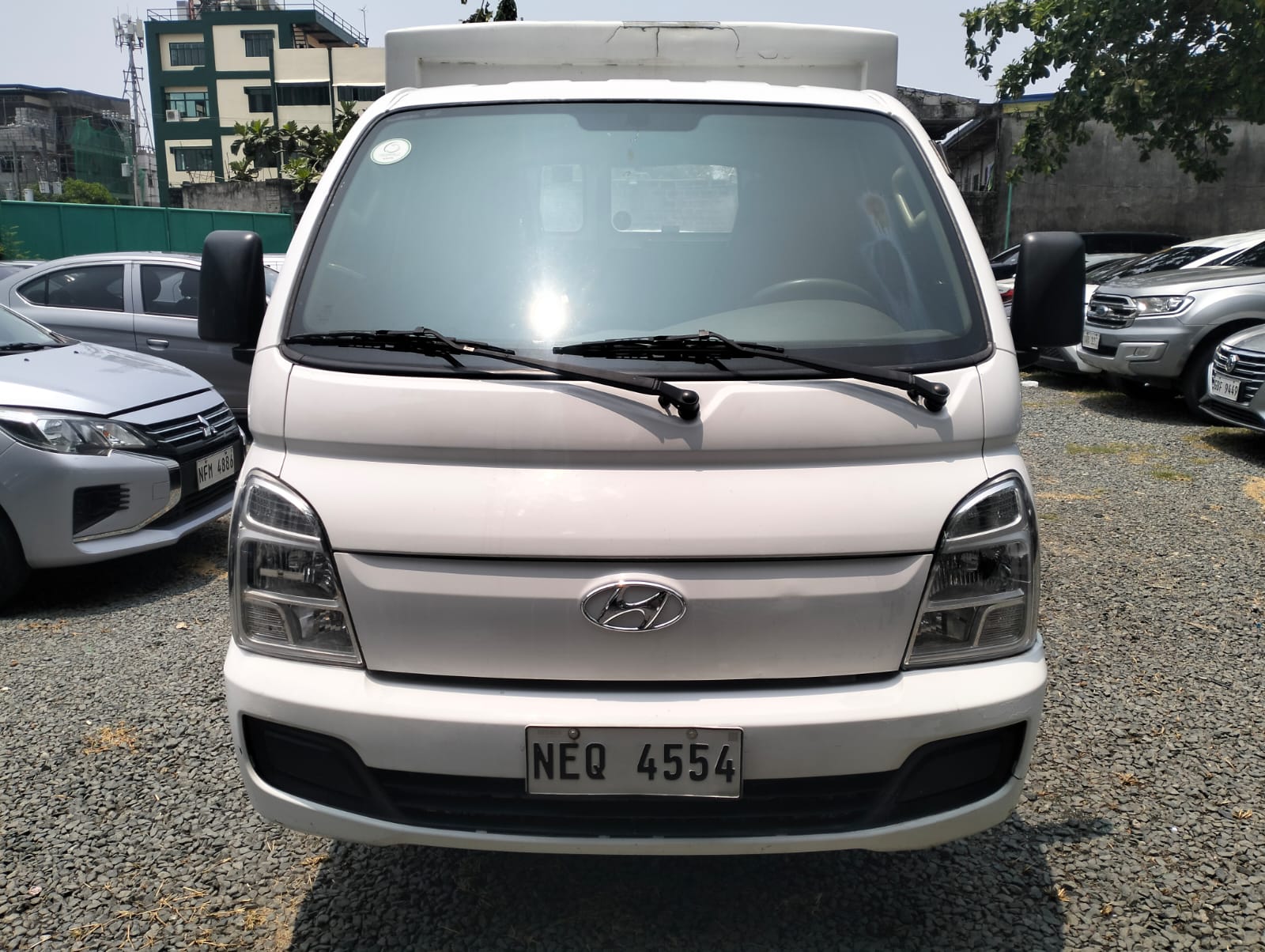
In October 2026 the H100 units on our Parañaque lot are listed at ₱460,000 for a 2022 model and ₱590,000 for a 2025 model, and those two numbers bracket what a clean, recent-generation unit should cost.
Five things move the price of a used H100:
- Year and engine generation. Euro 4 CRDi units with the 6-speed are worth more than the earlier 5-speed trucks, and buyers know it.
- Body type. A shuttle body with working rear AC costs more to build than a dropside, so it sells for more used.
- Body condition. Replacing a rotted aluminum van or a cracked shuttle floor is a real expense that comes straight off the value.
- Mileage and use. A school-service unit that ran two trips a day is a different truck from a delivery unit that ran all day.
- Paperwork. A CR already classified for hire, or one still encumbered to a lender, changes what you can do with the truck and when.
Pre-2015 units exist at far lower asking prices, but at that age the body, clutch and injectors decide the real cost, not the sticker. We do not quote market ranges for them because condition varies too much to be useful.
Every unit we sell goes as-is, where-is. You send a private sealed offer, which is never shown to other buyers; we confirm, counter or accept. Full payment comes before release, and the OR/CR and transfer documents follow 2 to 4 weeks after full payment. The how it works page walks through each step.
H100 vs L300 vs Traviz
The H100 is the most powerful and most comfortable of the three Philippine one-tonne workhorses, the L300 is the cheapest to keep, and the Traviz is the newest design with the longest bed in its L form.
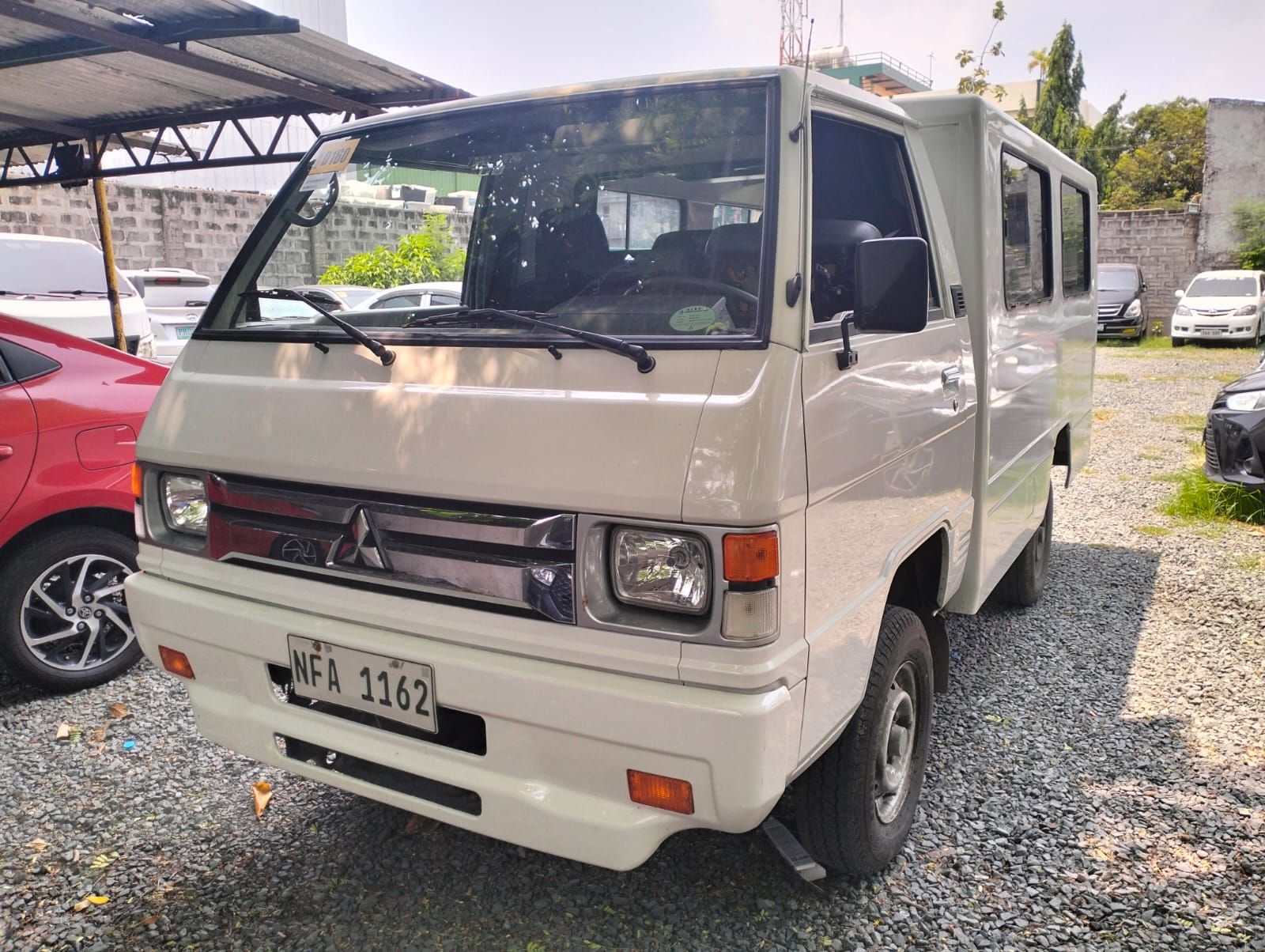
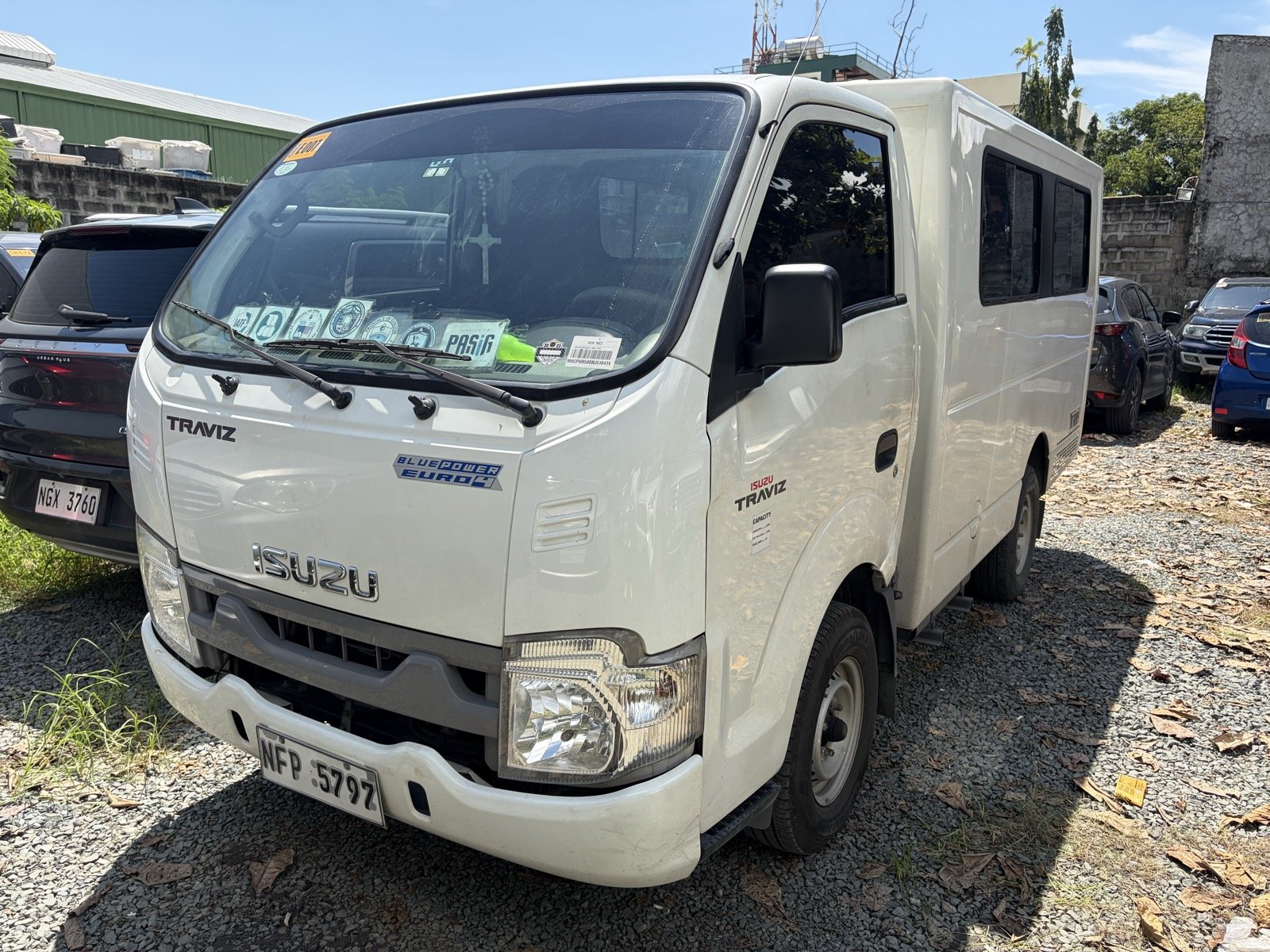
| Hyundai H100 | Mitsubishi L300 (2017 on) | Isuzu Traviz | |
|---|---|---|---|
| Engine | 2.5 CRDi turbo-diesel, Euro 4 | 2.2 turbo-diesel, Euro 4 | 2.5 diesel, Euro 4 |
| Published output (approx.) | About 130 PS / 255 Nm | About 100 PS / 200 Nm | Lowest of the three, tuned for low-rev pulling |
| Cab layout | Semi-bonneted (short nose) | Cab-over (engine under the seats) | Semi-bonneted |
| Gearbox | 6-speed manual (recent units) | 5-speed manual | 5-speed manual |
| Body options | Shuttle, aluminum van, dropside, FB, cab-chassis | FB, FB Exceed, dual AC, aluminum van, cab-chassis | FB, aluminum van, dropside, cab-chassis; L (long) or S (short) wheelbase |
| Strongest point | Power and cabin comfort | Lowest running cost, parts in every town | Longest bed (L), newest design |
| Watch for | Injectors and clutch on high-km units | Cabin heat, oil leaks on the older 2.5 | Fewer used units, so prices stay higher |
| In our stock (October 2026) | 2022 at ₱460,000; 2025 at ₱590,000 | 2023 FB Dual AC at ₱460,000 | 2023 Traviz L at ₱640,000 |
The L300 wins on running cost and on fitting a long bed into a short overall length; we cover it in detail in our used Mitsubishi L300 buying guide. The Traviz is the newest of the three and the least common on the used market. If you are still deciding between a truck and a proper van, our guide to the best used vans for business compares all of them on cost per peso.
What to check on a used H100
The five things that cost real money on a used H100 are the clutch, the fuel system, the turbo, the rear leaf springs and the body mounting, so inspect those before anything cosmetic.
- Cold start and smoke. Start it cold. A long crank or blue smoke points to injectors or glow plugs; black smoke under load that does not clear suggests injector or turbo trouble. Our guide to engine smoke colours explains what each one means.
- Clutch bite and judder. Light trucks get slipped in traffic with a load on. A clutch that bites at the very top of the pedal, judders on take-off or smells after a hill is close to replacement.
- Fuel system. Ask where it fuels up. Common-rail injectors dislike dirty diesel, and owners commonly report rough idle and hard starts when the fuel filter has been neglected. Look inside the filter housing for sludge.
- Turbo and intercooler hoses. Listen for a whistle on boost and look for oil weeping at the hose joints.
- Rear leaf springs. Look at the truck from behind on level ground. A lean to one side or flattened leaves means it has been overloaded; added or cracked leaves are a giveaway.
- Body mounts and welds. Look under the body where it meets the frame rails. Rust, loose U-bolts or fresh paint over welds tell you the body has been swapped or repaired.
- Brakes and steering. A pull under braking or more than a little play in the wheel means money.
- Paperwork. The CR must match the engine and chassis stampings, show the classification you expect, and be free of an unreleased encumbrance. A change of ownership also needs a PNP-HPG clearance; our used car documents checklist lists every paper to see before you pay.
Running costs for a small business
An H100 is cheap to keep by truck standards: diesel fuel, long service intervals, and parts stocked by Hyundai dealers and most aftermarket shops in Metro Manila.
- Fuel. Owners commonly report around 10 km per litre in Metro Manila traffic with a load; lighter routes do better. Diesel is usually the cheaper fuel at the pump, and our diesel vs gasoline guide runs the numbers for a working vehicle.
- Maintenance. Oil and filters on the schedule in the manual. The fuel filter is the one item never to skip on a common-rail diesel.
- Tyres. Light-truck sizes cost less per tyre than SUV sizes but wear faster when loaded; budget for a set sooner than you would on a car.
- Registration and insurance. If the truck will carry passengers or cargo for hire, its CR classification and LTFRB status matter; a private-use unit stays on the ordinary LTO renewal schedule. Comprehensive cover on a bodied truck is worth pricing before you buy.
- Driver. Manual only, so hire accordingly.
- Financing. We arrange buyer financing through lending partners from 1.40% per month add-on rate, subject to credit approval, plus a one-time 6.95% chattel and processing fee on the amount financed. Details are on the financing page. Dealers building a fleet to resell can ask about our dealer stock financing, from 1.75% per month, for dealers only.
H100 units in stock
As of October 2026 we have two Hyundai H100 units on the lot, both white and both manual, plus a Starex for buyers who really need a passenger van.
- 2025 Hyundai H100 2.5 GL W/ AC, windowed body with AC, listed at ₱590,000 (October 2026). The one to buy if the truck will carry people.
- 2022 Hyundai H100 MT, closed cargo body, listed at ₱460,000 (October 2026). The one to buy for deliveries that need a lockable box.
- 2013 Hyundai Grand Starex AT, listed at ₱350,000 (October 2026). An automatic passenger van, not a truck, for shuttle work where comfort matters more than payload.
Stock changes weekly, so check the live H100 search before you drive over, and send a sealed offer on the unit that fits. If you are replacing a truck, we also buy cars, including bodied commercial units.
FAQ: used Hyundai H100 questions we hear most
Is the Hyundai H100 reliable?
Yes, by light-truck standards the H100 is reliable when its diesel is kept clean and the clutch is not abused. The 2.5 CRDi engine is shared across Hyundai's commercial range and parts are easy to find in the Philippines. Owners commonly report injector and clutch wear on high-mileage, overloaded units, so service history matters more than age.
How much is a used Hyundai H100 in the Philippines?
It depends on year, body and condition. On our Parañaque lot in October 2026 a 2022 H100 with a closed cargo body is listed at ₱460,000 and a 2025 H100 2.5 GL with AC at ₱590,000. Older pre-Euro 4 units sell for less, but at that age the body and fuel system decide the real cost, not the asking price.
Hyundai H100 vs Mitsubishi L300: which is better for business?
Choose the H100 if you carry heavier loads, drive long routes or want a quieter, cooler cab with more power. Choose the L300 if your priority is the lowest running cost, the simplest mechanicals and parts available in every town. Both are rear-wheel-drive diesel manuals that accept the same FB, van and dropside bodies.
What body types does the H100 come in?
The H100 is sold as a cab-and-chassis and bodied to order, so you will find shuttle bodies with seats and windows for passengers, closed aluminum vans for dry cargo, dropsides for construction materials, FB bodies for mixed use, and the occasional refrigerated or custom box. Body-builder quality varies, so inspect the mounting and welds before you offer.
How much load can a Hyundai H100 carry?
Roughly a tonne or more, depending on the body fitted and the year of the chassis. Do not rely on a seller's figure: the gross vehicle weight and net capacity are printed on the Certificate of Registration, and the difference between them, minus the body and passengers, is your usable payload. Overloading is the fastest way to wear the springs and clutch.