
A van is the one vehicle that has to earn its keep every single day. Whether you are running a water-refilling delivery route, a catering service, an online-store fulfilment van, or a school and office shuttle, the right used van pays for itself. The wrong one bleeds you dry on fuel, downtime and repairs.
Good news: the Philippine used-van market is one of the easiest segments to buy smart in, because the same handful of models have dominated for years. That means predictable prices, plenty of parts, and mechanics who know these engines in their sleep. This guide compares the four vans small businesses ask us about most — the Mitsubishi L300, Hyundai H100, Nissan NV350 Urvan and Hyundai Grand Starex — using real units on our Parañaque lot.
Matching the van to the business
Before you compare badges, be honest about the job. The single biggest mistake we see is buying a passenger van to haul cargo, or a cargo van to carry paying passengers. They are taxed, registered and built differently, and getting it wrong costs you at the LTO and at the pump.
Split your need into two questions. First: are you mainly moving goods or people? Second: how far and how heavy, daily? A market vendor doing 40 km of city deliveries has nothing in common with a shuttle running Cavite to Makati twice a day.
- Cargo, light-to-medium, tight budget: Mitsubishi L300 FB or Hyundai H100.
- Maximum passengers per peso: Nissan NV350 Urvan.
- Paying passengers who expect comfort: Hyundai Grand Starex.
All four are diesel, which is what you want for business — better torque for loads and cheaper running costs over long distances. If you are still deciding between a van and something else entirely, our guide to buying a second-hand car in the Philippines walks through the wider trade-offs, and businesses that also need a bed for open loads should read our used pickup trucks guide.
Mitsubishi L300: the default FB workhorse
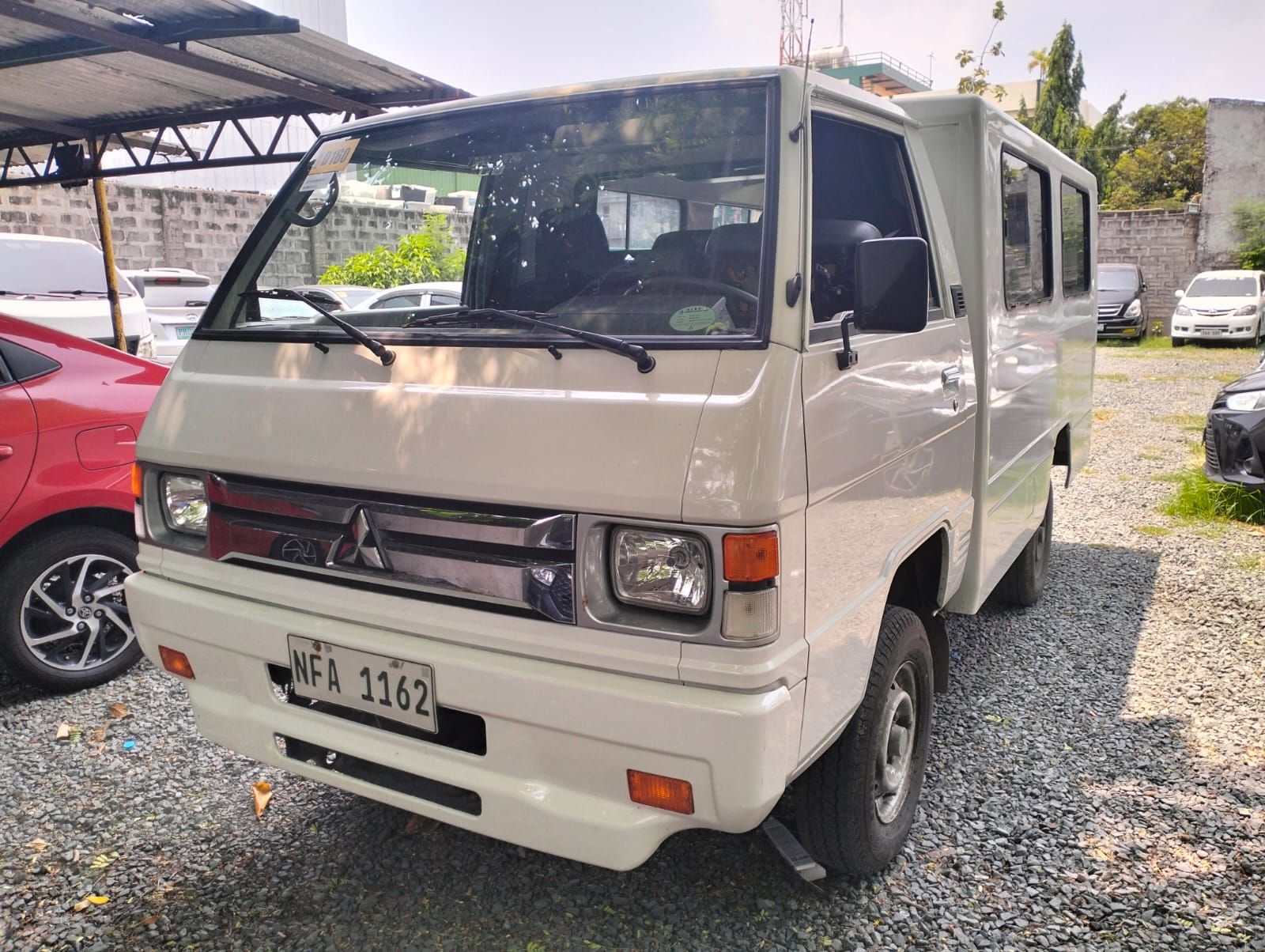
If there were a national vehicle of Filipino small business, it would be the L300. The FB (fabricated body) version turns the L300 cab-chassis into an enclosed aluminium van, and you see it everywhere — delivering pandesal at dawn, moving furniture at noon, doubling as a school service by afternoon.
Why it stays on top is not glamour, it is certainty. Parts are in every town, any mechanic can fix it, an FB body can be repaired or replaced cheaply, and resale is rock-solid because demand never dries up. The diesel engine is simple and durable, and payload is generous for the size.
The trade-offs are honest ones: it is basic to drive, not fast, and older units can feel bare. But for a business owner who values uptime over refinement, that simplicity is the feature. Our 2023 Mitsubishi L300 FB Dual AC MT is listed at ₱480,000 (July 2026), and the dual air-con matters if your crew or goods sit in the back through NCR traffic.
Hyundai H100: the L300's closest rival
The Hyundai H100 is the van most likely to make an L300 buyer hesitate. It plays the exact same role — a diesel cab-and-body van built for daily hauling — but usually gives you a roomier, more car-like cab and a modern common-rail diesel that many drivers find quieter and more relaxed on the highway.
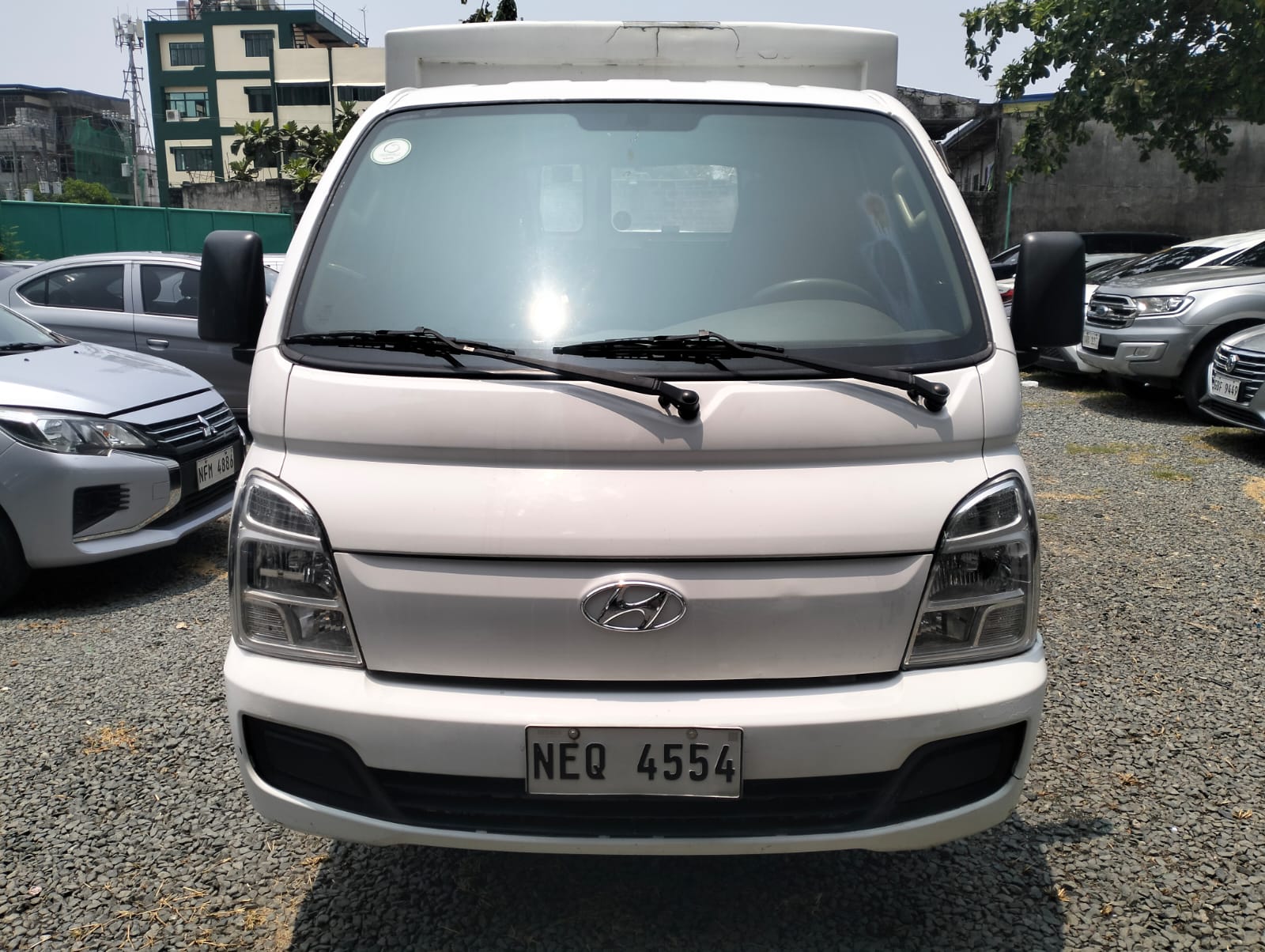
Where the L300 wins is the boring stuff that keeps a business running: sheer parts availability and the number of mechanics who know it cold. The H100's network is good, just not quite as everywhere. So the decision is less about which is "better" and more about which risk you would rather carry — ultimate serviceability, or a fresher drivetrain and cabin.
Our 2022 H100 MT is listed at ₱564,000 (July 2026). That is a modest premium over a comparable L300, and for many buyers the newer year and nicer cab justify it. Test-drive both back to back if you can — the difference is obvious in ten minutes.
NV350 Urvan: people-mover economics
When the job is moving people rather than boxes, the maths changes completely, and the Nissan NV350 Urvan is built for that maths. Where a cargo van thinks in cubic metres, the Urvan thinks in seats — and it packs a lot of them for the money.
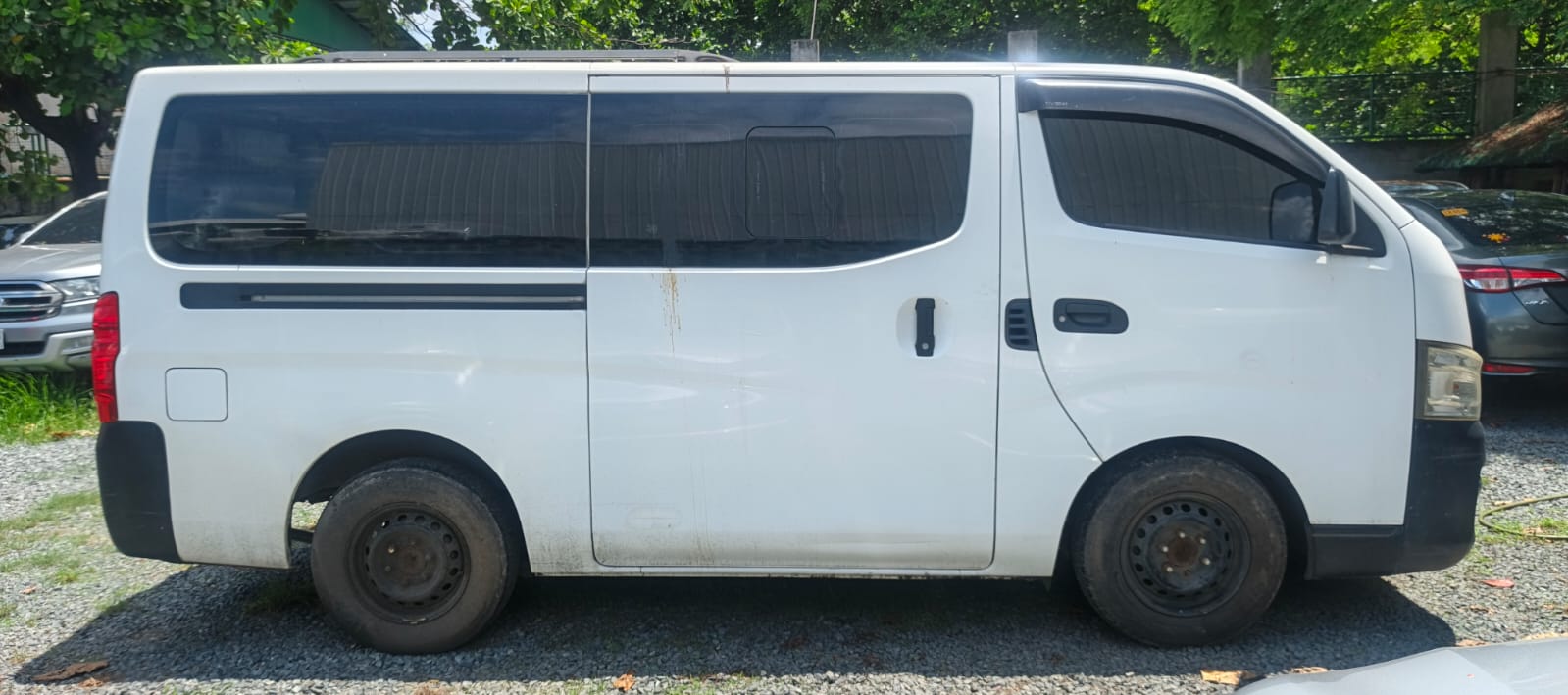
Configurations vary, but common layouts seat around 15, and the long-body commuter version is frequently sold as an 18-seater. That makes the Urvan the default choice for employee shuttles, tourist transport, church and school groups, and any operator whose revenue is measured per head. The 2.5-litre diesel is proven and pulls a full load without drama.
If your budget is tighter and you can live with an older unit, we also have a higher-capacity option: this 2016 Nissan Urvan NV350 18-seater MT is listed at ₱510,000 (July 2026). Whichever you pick, confirm the seating recorded on the OR/CR — the registered classification affects your franchise, your insurance and how you may legally operate. You can see the Urvans we have in stock and line up a viewing.
Grand Starex: the comfort option
Some businesses carry passengers who are paying for the experience, not just the ride — executive transfers, hotel and resort shuttles, premium tours, or a family enterprise that wants one comfortable vehicle for both work and weekends. That is Grand Starex territory.
The Starex trades the Urvan's raw seat count for genuine comfort: a quieter cabin, better trim, captain's chairs in higher grades, and a smoother diesel drive. It seats fewer people, but the ones it carries arrive happier. For a shuttle where reviews and repeat clients matter, that can be worth more than two extra seats.
It is the priciest to maintain of the four here, so budget for that. But on the used market the entry price is friendly — our 2013 Hyundai Grand Starex AT is listed at ₱350,000 (July 2026), which puts a comfortable people-mover within reach of a small operator. Being an older automatic diesel, a pre-purchase transmission and injector check is money well spent.
Cost table: price, fuel, load capacity
Here is how the four stack up using real units currently on our lot. Prices are the guide prices you would make a sealed offer against; fuel and capacity notes are general PH-market context, not exact factory figures.
| Van (our unit) | Guide price (July 2026) | Primary job | Typical capacity | Running-cost note |
|---|---|---|---|---|
| 2023 Mitsubishi L300 FB | ₱480,000 | Cargo / delivery | 2–3 in cab + full FB load bay | Cheapest to fix, parts everywhere |
| 2022 Hyundai H100 | ₱564,000 | Cargo / delivery | 3 in cab + load body | Modern diesel, roomier cab |
| 2020 Nissan NV350 Urvan | ₱785,000 | Passengers | ~15 seats (config-dependent) | Best cost per seat |
| 2013 Hyundai Grand Starex | ₱350,000 | Comfort passengers | ~10–12 seats | Priciest upkeep, best comfort |
Remember the cheapest sticker is rarely the cheapest van. A ₱350,000 Starex with tired injectors can cost more in year one than a ₱480,000 L300 that just works. Factor in fuel over your real monthly distance, expected repairs for the age, and how many productive days you lose when it is in the shop.
If cash flow is the constraint, financing can spread the cost. Our lending partners offer terms from 1.40% per month add-on (subject to credit approval) plus a one-time processing fee — see the financing page for the full breakdown before you commit. As an illustration only, financing ₱480,000 over 36 months at a 1.40% add-on works out to roughly ₱480,000 + (₱480,000 × 0.014 × 36) ÷ 36 ≈ ₱20,053 per month, with your final rate subject to approval.
Inspecting a hard-worked van before buying
Vans live harder lives than private cars — overloaded, driven all day, parked outdoors. So inspect harder. Every unit on our lot is sold as-is, where-is, which is exactly why we encourage you to look closely and bring help.
- Get underneath. Chassis rust, patched welds, or a waterline of dried mud are red flags for overload damage or flooding. This matters most on FB vans, where a pretty body can hide a rotten frame.
- Start it cold. A healthy diesel fires quickly with little white or black smoke. Hard starting and heavy smoke can mean glow plugs, injectors or worse.
- Work every door and seat. Sliding doors, rear barn doors and folding seats get abused daily; check they latch, slide and lock properly.
- Check for leaks and overheating. Look for oil and coolant drips, and watch the temperature gauge on the test drive.
- Verify the papers. Confirm clean OR/CR with engine and chassis numbers matching the unit, and that the registered seating suits your intended use.
For a full step-by-step under the hood, our used-car engine check guide applies directly to diesel vans. Better still, bring a trusted mechanic to your appointment — an hour of their time is cheap insurance on a vehicle you will lean on daily. You can read how our sealed-offer process works so you know what to expect, and if you have a van to trade, we also buy vehicles with a fast, market-based offer.
FAQ: buying a used van for business
What is the best van for a small business in the Philippines?
There is no single winner — it depends on the job. For pure cargo and delivery on a tight budget, the Mitsubishi L300 FB is the default workhorse because parts and mechanics are everywhere. For moving people, the Nissan NV350 Urvan seats far more per peso. The Hyundai H100 is a strong L300 alternative, and the Grand Starex suits businesses that carry paying passengers who expect comfort.
L300 or H100: which is better for cargo?
Both are diesel cab-and-body vans built for daily hauling, so it is close. The L300 wins on the sheer availability of parts, mechanics and FB bodies in almost every town. The H100 typically offers a slightly roomier cab and a modern common-rail diesel. If you want the safest resale and easiest repairs nationwide, choose the L300; if you want a fresher drivetrain, look hard at the H100.
How many passengers can an NV350 Urvan carry?
It depends on the configuration. Common NV350 Urvan layouts seat around 15 people, while the long-body commuter setup is often sold as an 18-seater. Always confirm the seating written on the OR/CR, because the registered classification affects your franchise, insurance and how you can legally use the van for business.
What should I check when buying a used van?
Vans are usually worked hard, so inspect harder than you would a private car. Check the chassis and floor for rust and flood signs, listen for diesel smoke and hard starting, test every door, roll under to look for oil leaks, and confirm clean OR/CR with matching engine and chassis numbers. Because our units are sold as-is, we encourage a mechanic to join your appointment.
Ready to put one to work? Browse the vans in stock, then bring a mechanic and see it in person at our Parañaque lot.