
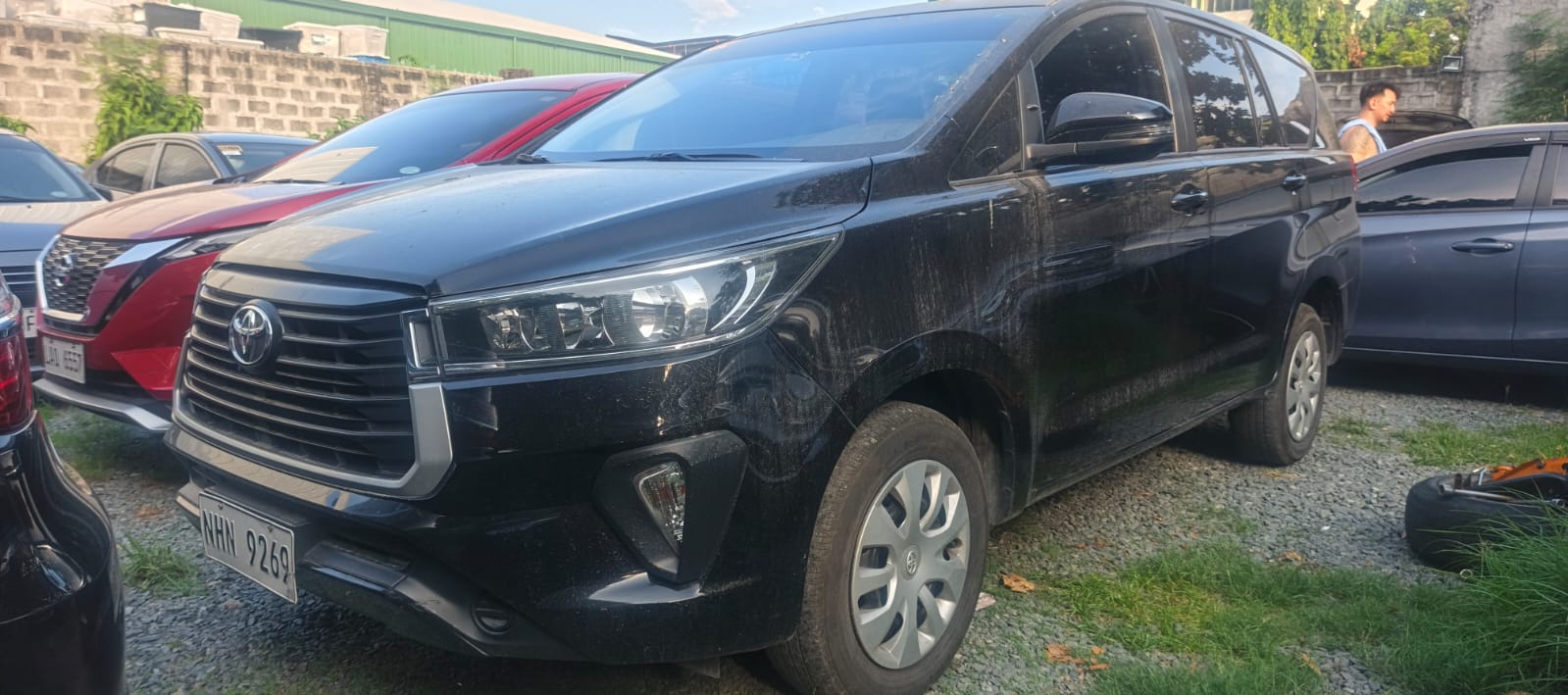
The diesel vs gasoline question comes up at our Parañaque lot almost every day, usually from a buyer who has heard that diesel is cheaper to run and is about to pay a premium for it. Sometimes that premium is worth it. Often it is not, and the honest answer depends on how many kilometers you drive and what you carry, not on which fuel is cheaper at the pump this week.
This guide compares the two on fuel cost per kilometer, maintenance, longevity and resale in the Philippine market, then lists the diesel-specific checks to run before you buy, with real units from our stock on both sides.
Quick verdict by use case
The right engine follows from your use case: distance, load and body type decide it before price does.
- Daily Metro Manila commute, under about 40 km a day: gasoline. A Vios, City or Mirage G4 is cheap to buy, cheap to service and does not mind idling in traffic.
- Family 7-seater with monthly provincial trips: diesel if the mileage adds up (Innova 2.8, Everest), gasoline if the car mostly does school runs (Stargazer, Xpander, Veloz).
- Business van or delivery vehicle: diesel, without much debate. The H100, L300 and Urvan are diesel for a reason: torque with a load and fuel cost per kilometer.
- Pickup for work: diesel. Nearly every pickup sold in the Philippines is a diesel, so the choice is made for you.
- Ride-hailing or fleet sedan: gasoline subcompact. Cheap PMS and light weight matter more than torque.
- Weekend-only car with low kilometers: gasoline. Newer diesels with emissions hardware dislike short, cold trips.
| Diesel | Gasoline | |
|---|---|---|
| Fuel use (owner-reported, mixed driving) | 10 to 14 km/L in an MPV or SUV | 8 to 11 km/L in an MPV; 12 to 16 km/L in a subcompact sedan |
| Pump price | Usually a few pesos per liter below gasoline in Metro Manila; the gap varies | Usually the pricier fuel per liter; 91 RON is the common grade |
| Routine service | More oil per change, diesel-grade oil, fuel filter every service | Less oil, cheaper oil, spark plugs and coils; CVT fluid on newer cars |
| Big-ticket risks | Injectors, turbo, EGR and DPF carbon on Euro 4 units | CVT or automatic transmission, ignition coils, catalytic converter |
| Short-trip tolerance | Poor on newer Euro 4 units (carbon build-up) | Good |
| Longevity with servicing | Commonly 250,000 km and beyond | Commonly 200,000 km and beyond |
| Resale in the Philippines | Strong in MPVs, SUVs, pickups and vans | Strong in subcompact sedans (Vios, City, Mirage G4) |
| Examples on our lot | Innova 2.8, Everest, Ranger Wildtrak, H100 | Vios 1.3, City 1.5, Stargazer 1.5 |
Fuel cost per kilometer
Per kilometer, diesel is usually cheaper in the Philippines for the same size of vehicle, because a diesel engine goes further on a liter and the pump price of diesel has usually sat a few pesos below gasoline. That gap narrows, and has occasionally flipped, so do the arithmetic with today's pump board rather than a rule of thumb.
Here is the arithmetic with illustrative pump prices (₱60 per liter diesel, ₱65 per liter gasoline; substitute the current numbers) and owner-reported fuel economy:
- Diesel MPV at 12 km/L: ₱60 ÷ 12 = ₱5.00 per km, or about ₱75,000 a year at 15,000 km.
- Gasoline MPV at 9 km/L: ₱65 ÷ 9 = ₱7.22 per km, or about ₱108,000 a year at 15,000 km.
- Gasoline subcompact sedan at 13 km/L: ₱65 ÷ 13 = ₱5.00 per km, or about ₱75,000 a year at 15,000 km.
Two things fall out of that. First, diesel's real advantage is in the 7-seater, SUV, van and pickup classes, where the gasoline alternative is thirsty. Second, a gasoline subcompact matches a diesel MPV per kilometer, so a Vios commuter is not losing money by skipping diesel. At 8,000 km a year the gap between a diesel and gasoline MPV shrinks to roughly ₱18,000, which a higher diesel purchase price and pricier servicing can eat in a year or two. Our total cost of car ownership guide puts fuel next to the other yearly costs.
Maintenance: what each engine asks for
Gasoline engines are cheaper and simpler to maintain per visit; diesels cost more per service and punish skipped fuel filters, but ask for little else if the intervals are kept.
What a diesel asks for:
- More oil per change and a diesel-grade oil, so each PMS costs more than a gasoline car of the same size.
- A fuel filter at every service. Common-rail injectors are machined to fine tolerances and dirty or watery diesel wears them; owners commonly report injector replacement as the single most expensive repair on an older diesel.
- A turbocharger, which needs clean oil and a cool-down after hard driving.
- On Euro 4 and newer units, an EGR valve and sometimes a diesel particulate filter (DPF), both of which clog with carbon under constant short-trip city use.
- Glow plugs, and on some older diesels a timing belt on a fixed interval.
What a gasoline engine asks for:
- Less oil, cheaper oil, and spark plugs and ignition coils that cost little and are stocked everywhere.
- On modern automatics, a CVT or automatic transmission fluid change on schedule; a neglected CVT is the gasoline car's version of a bad injector.
- A catalytic converter and oxygen sensors that dislike poor-quality fuel, though far less expensively than diesel injectors do.
Longevity and high-mileage behaviour
Diesel engines generally outlast gasoline engines of the same era because they are built heavier and spin slower, but both pass 200,000 km in the Philippines when they are serviced. The fuel type matters less than the service history and how the kilometers were driven.
The proof sits on our lot. Our 2019 Ford Ranger Wildtrak has 274,000 km on it and is still a working truck; that is about 39,000 km a year, mostly highway, which is the easiest kind of mileage for a diesel. On the gasoline side, Metro Manila taxi fleets commonly run Vios units well past 200,000 km on nothing more than regular oil changes.
What wears at high mileage differs. On a diesel it is injectors, the turbo, engine mounts and, on manuals, the clutch. On a gasoline car it is the CVT or automatic, ignition coils, suspension bushings and the aircon compressor. A high-mileage diesel with highway kilometers can be a better buy than a low-mileage gasoline car that spent its life idling; our high mileage vs old car guide explains why.

Resale value in the PH market
Diesel holds resale better in the body styles where Filipino buyers expect diesel, which means MPVs, SUVs, pickups and vans; gasoline holds up just as well in sedans and small MPVs where diesel was never on the menu.
The clearest example is the Innova. A diesel Innova sells quickly at a premium because provincial and fleet buyers want that engine; the gasoline 2.0 sits longer and sells for less. Our used Toyota Innova buying guide goes into the variants. The reverse is true for a Vios or City: nobody is waiting for a diesel version, so a clean gasoline unit holds value on demand from first-time buyers alone.
Two cautions. A diesel with a visible smoke or injector problem loses more value than a gasoline car with an equivalent fault, because every buyer knows the repair is expensive. And in Metro Manila, a diesel that has only ever done short trips may carry carbon problems that show up as warning lights at the worst time, which is during your buyer's test drive.
Diesel-specific checks before you buy (smoke, turbo, injectors)
Before you buy a used diesel, spend ten minutes on three things: exhaust smoke on a cold start, the turbo, and the injectors. All three are expensive, and all three show themselves if you know what to look for.
- Smoke on cold start. A short white puff that clears in seconds is normal. Continuous white smoke points to unburnt fuel, weak glow plugs or coolant; blue smoke is burning oil; black smoke under load is over-fuelling, a choked air filter or a stuck EGR. Our engine smoke color guide decodes each one.
- Turbo. A soft whistle under acceleration is fine. A siren-like whine, a noticeable flat spot before boost arrives, a hiss from a split hose, or oil pooled inside the intercooler piping all mean turbo or boost-system work.
- Injectors. Listen at idle for a hard, rhythmic tapping, feel for a rough or hunting idle, and sniff the cabin for raw diesel. Long cranking before the engine catches is another tell. Ask when the fuel filter was last changed and whether any injector has been replaced.
- Warning lights and oil cap. An EGR or DPF light that stays on is a carbon problem waiting to be billed. Diesel oil turns black quickly, which is normal; a milky residue under the cap is not.
- Gasoline cars get their own checks. Idle smoothness (a misfiring coil shakes the car), CVT behaviour on the test drive, and the same cold-start routine, as covered in our used car engine check.
Diesel and gasoline units in stock
Our Parañaque lot in October 2026 has both sides of this argument parked a few meters apart, so you can test the difference on the same afternoon.
Diesel:
- 2025 Toyota Innova 2.8 XE AT, 39,989 km, listed at ₱930,000 (October 2026).
- 2017 Ford Everest Trend AT, 85,012 km, listed at ₱520,000 (October 2026).
- 2019 Ford Ranger Wildtrak AT, 274,000 km, listed at ₱525,000 (October 2026).
- 2022 Hyundai H100 MT, listed at ₱460,000 (October 2026).
Gasoline:
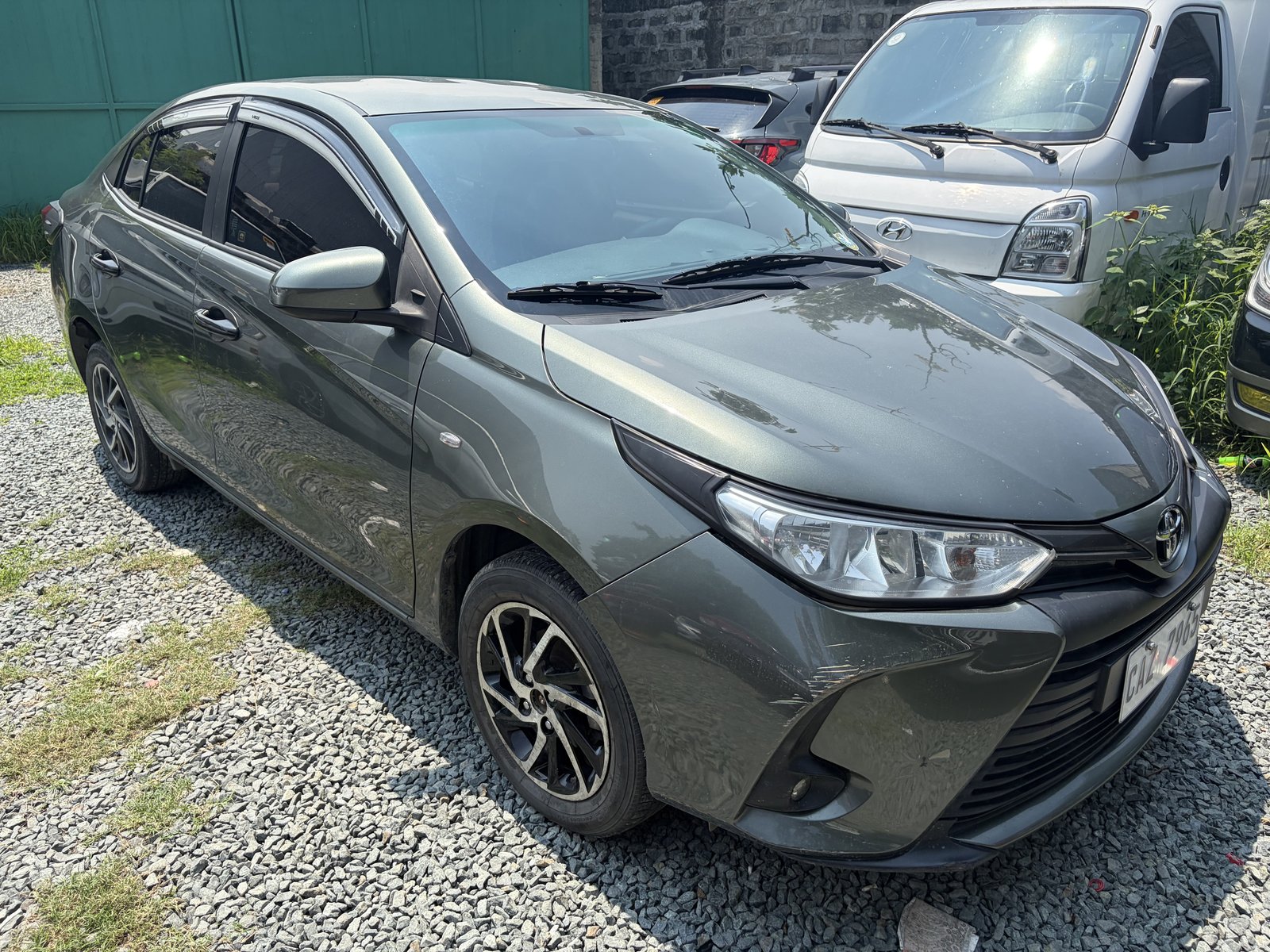
- 2023 Toyota Vios 1.3 XLE CVT, 25,454 km, listed at ₱495,000 (October 2026).
- 2018 Honda City 1.5 VTEC AT, listed at ₱381,000 (October 2026).
- 2024 Hyundai Stargazer GL IVT, 38,851 km, listed at ₱570,000 (October 2026).

Every unit is inspected and its documents verified before listing, and sold as-is, where-is through a private sealed offer that no other buyer sees. Full payment is made before release and the OR/CR follows 2 to 4 weeks later. Financing starts from 1.40% per month add-on rate, subject to credit approval, plus a one-time 6.95% chattel and processing fee on the amount financed; see our financing page and how it works. If you are switching camps, we buy cars too.
FAQ: diesel vs gasoline questions buyers ask
Is a diesel or gasoline car better in the Philippines?
It depends on your mileage and body type. Diesel is better for high annual mileage, provincial trips, 7-seaters, vans and pickups because it uses less fuel per kilometer and the engines last longer under load. Gasoline is better for low-mileage Metro Manila driving in sedans and small MPVs because it costs less to buy and service.
Are diesel cars cheaper to maintain?
Not per visit. A diesel service uses more oil, diesel-grade oil and a fuel filter, so each preventive maintenance costs more than on a gasoline car. Diesels can be cheaper over a long ownership because they tolerate heavy use and high mileage, but a neglected diesel with injector or turbo trouble is far more expensive to put right.
Do diesel cars last longer than gasoline cars?
Generally yes. Diesel engines are built heavier and run at lower revs, which is why Philippine pickups, vans and MPVs commonly pass 250,000 km. Gasoline cars are not far behind when serviced: Metro Manila taxi fleets run Vios units well past 200,000 km. Fuel-filter and oil discipline matter more than the fuel type itself.
Is diesel cheaper than gasoline per kilometer?
Usually, yes, for the same size of vehicle. A diesel MPV commonly returns 10 to 14 km per liter against 8 to 11 for a gasoline MPV, and the pump price of diesel has usually sat a few pesos below gasoline, though the gap varies. A gasoline subcompact sedan can match a diesel MPV per kilometer.
Which has better resale value, diesel or gasoline?
Diesel holds value better in body types where Filipino buyers expect diesel: MPVs like the Innova, SUVs like the Everest and Montero Sport, pickups and vans. Gasoline holds value just as well in subcompact sedans such as the Vios, City and Mirage G4, where diesel was never offered and demand from first-time buyers stays high.
Book a back-to-back test drive of a diesel and a gasoline unit →