
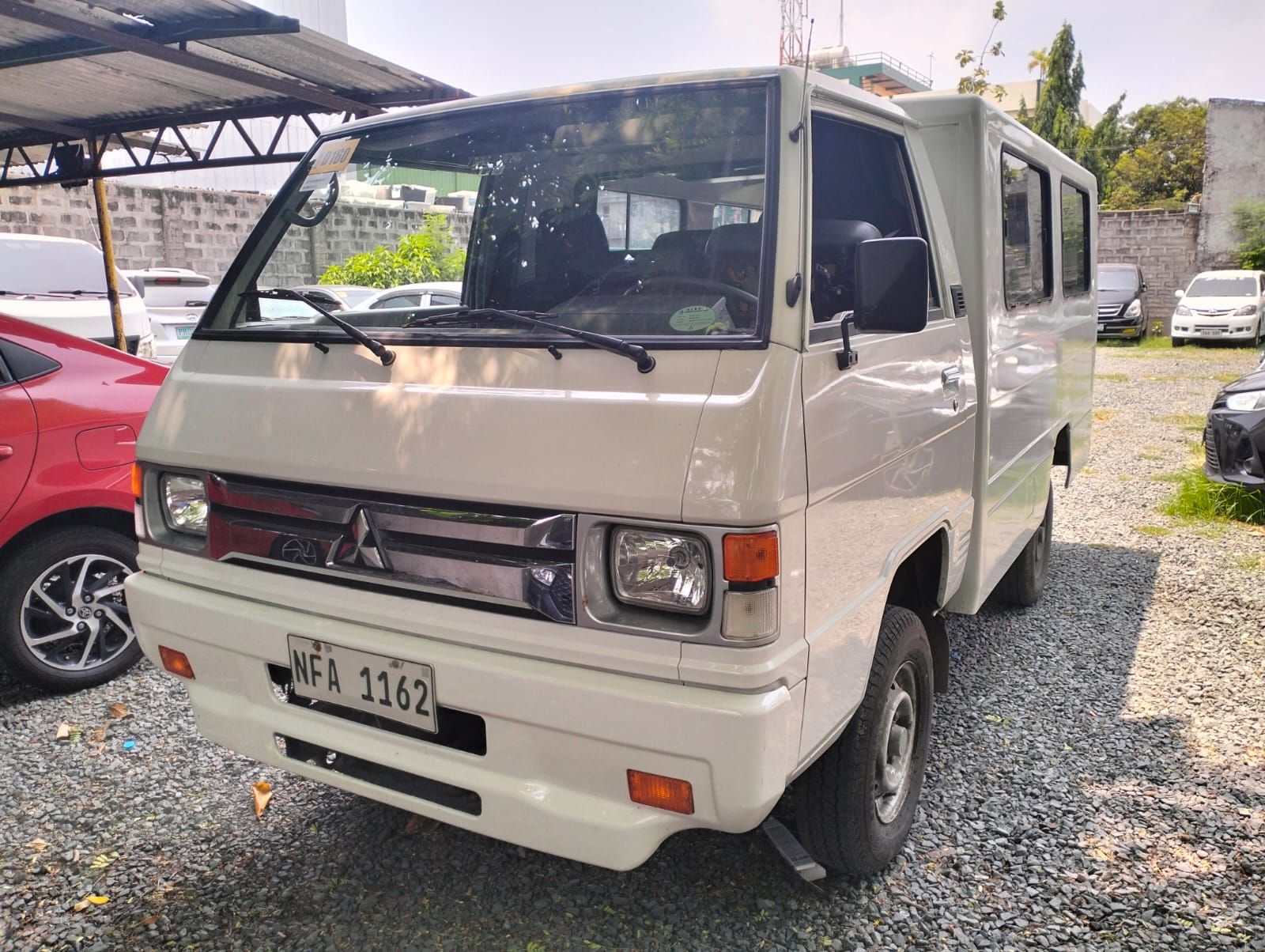
The Mitsubishi L300 has been hauling Filipino businesses since the 1980s and it is still sold new today, which tells you how well the formula works. Rear-wheel drive, a diesel under the front seats, leaf springs at the back and a steel FB body: nothing fancy, and nothing a provincial mechanic cannot fix.
This guide is written from the inspection and selling side of a Parañaque lot. It covers the body types, the two engines you will meet, what a used L300 costs in October 2026, the inspection points that matter on a van that has worked hard, and how it compares with the Hyundai H100 and Isuzu Traviz.
Why the L300 refuses to die
The L300 refuses to die because it is the cheapest one-tonne vehicle to own in the Philippines: simple mechanicals, parts in every town, bodies built by hundreds of local shops, and a resale market that absorbs every unit.
Cab-over means the driver sits above the front axle and the engine is under the front seats. You get a short overall length for a long bed, which is why an L300 fits where a pickup does not, but the cabin is warmer and noisier than a semi-bonneted truck such as the H100.
Mitsubishi paused the L300 for the Philippine market around 2017 when Euro 4 emission standards took effect, then brought it back with a cleaner 2.2-litre turbo-diesel. The body and chassis stayed the same recipe, so a 2023 unit and a 2010 unit take the same bodies and share most of the hard parts.
Who buys them: water-refilling stations, school-service operators, hardware and construction suppliers, catering teams, sari-sari distributors and provincial families who need one vehicle to do everything. That breadth of use is exactly why you inspect a used one carefully.
Body types: FB, Exceed, dual AC, cab and chassis
Most used L300s are FB units, and the body is where the money and the risk sit, so identify the body before you judge the price.
- Cab and chassis: the bare truck as Mitsubishi sells it. Almost every one is bodied before it reaches a buyer, so a bare used one is unusual.
- FB body: "FB" stands for family business, the windowed steel body with bench seats along the sides that defines the L300 in the Philippines. It carries people or cargo, which is the whole point.
- FB Exceed: a higher-trim FB offered through Mitsubishi dealers, with a more finished interior and better seats. Worth a premium only if the interior is still intact.
- Dual AC: a second evaporator in the rear body so the passengers get cold air, not just the driver. In Philippine heat this is the difference between a shuttle people tolerate and one they avoid, so test it, not just the front unit.
- Aluminum van and dropside: closed box or flat bed built by independent body builders for delivery and construction work.
The chassis is Mitsubishi's; the body is a local shop's. Look at how the body is bolted to the frame, whether the welds are sealed, and whether the floor has been patched. The 2023 FB Dual AC on our lot is the passenger-ready configuration most buyers want.
Old 2.5 diesel vs the 2.2 Euro 4 (2017 on)
The 2.2 Euro 4 turbo-diesel sold from 2017 onward is the engine to buy; the older 2.5 non-turbo diesel is simpler but slower and thirstier, and it is now at an age where oil leaks and tired injector pumps are the norm rather than the exception.
The older 2.5 non-turbo diesel
- Naturally aspirated with mechanical injection, so it tolerates dirty fuel and any mechanic can rebuild it.
- Well under 100 PS. Slow with a full FB load, especially on hills.
- Owners commonly report hard cold starts once the glow plugs tire, oil seepage from the valve cover and seals, and visible smoke on older units.
- Many have been rebuilt at least once. Ask for receipts and treat a rebuild with no paper as a rumour.
The 2.2 Euro 4 turbo-diesel (2017 on)
- Turbocharged, intercooled and common rail. Mitsubishi's published figures are roughly 100 PS and 200 Nm, which transforms the L300 under load.
- Five-speed manual, rear-wheel drive, same body options as before.
- Noticeably better fuel economy; owners commonly report around 10 to 12 km per litre in mixed driving with a moderate load.
- Needs clean diesel and regular fuel-filter changes. Fewer backyard mechanics know it, and parts cost more than on the old engine.
If you drive provincial routes with poor fuel quality and have a trusted mechanic, an honest old 2.5 can still make sense. For Metro Manila deliveries or any route with hills and traffic, the 2.2 earns its premium in fuel and in not being overtaken by tricycles. Our diesel vs gasoline guide explains why diesel still wins for a working vehicle.
Used L300 prices in October 2026
In October 2026 the one L300 on our Parañaque lot, a 2023 FB Dual AC, is listed at ₱460,000, and that is the money for a recent Euro 4 unit with a passenger-ready body.
What moves the price of a used L300:
- Engine generation. A 2.2 Euro 4 unit is worth considerably more than an old 2.5, and the gap grows every year the old engines age.
- Body and trim. FB Exceed with dual AC sits at the top; plain FB next; dropside and bare cab-chassis at the bottom.
- Body condition. A rusted floor, cracked window frames or a dead rear AC are real repair bills that come straight off the value.
- How it was used. School service that ran twice a day is gentler than a delivery unit that ran twelve hours a day with a full bed.
- Paperwork. A CR classified for hire, or one still encumbered to a lender, limits what you can do with the van and when.
Old 2.5 units sell for far less than our 2023, but we will not quote a market range for them because condition decides the price almost entirely at that age. Two L300s with the same year and the same asking price can be ₱100,000 apart in what they will cost you in the first year.
Every unit we sell goes as-is, where-is. You send a private sealed offer that no other buyer sees; we confirm, counter or accept. Full payment comes before release, and the OR/CR and transfer documents follow 2 to 4 weeks after full payment. See how it works for the full sequence.
Inspection points for a hard-working van
On an L300 the engine lives under the seats and the body lives on top of the frame, so the inspection that matters happens with the seat lifted and your head under the van, not standing beside it.
- Cold start and smoke. Start it cold. A long crank means glow plugs or compression; blue smoke means oil; thick black smoke under load points at injectors or the turbo on a 2.2.
- Engine cover and cabin heat. Lift the seat. A hardened or missing engine-cover gasket lets heat and noise into the cabin and is a sign of neglect elsewhere.
- Oil leaks. Look at the valve cover, the front and rear seals and the sump with the engine running. A film of oil and dust is normal on an old 2.5; active drips are not.
- Clutch. Drive it with weight on board. A bite point at the top of the pedal, judder on take-off or a burning smell after a hill means a replacement is close.
- Rear leaf springs. Stand behind the van on level ground. A lean, flattened leaves or extra leaves added by a previous owner all say it was overloaded.
- Steering box play. More than a little free play at the wheel is common on high-mileage L300s and costs money to fix properly.
- Floor, steps and welds. Rust starts in the cab floor, the door steps and where the body builder welded the FB to the frame. Fresh undercoat over those areas is a warning, not a feature.
- Dual AC. Run both units for ten minutes. A rear evaporator that blows cool but not cold is a compressor or refrigerant job.
- Paperwork. The CR must match the engine and chassis stampings and show no unreleased encumbrance. A change of ownership also needs a PNP-HPG clearance, and our used car documents checklist lists every paper to see before you pay.
L300 vs H100 vs Traviz
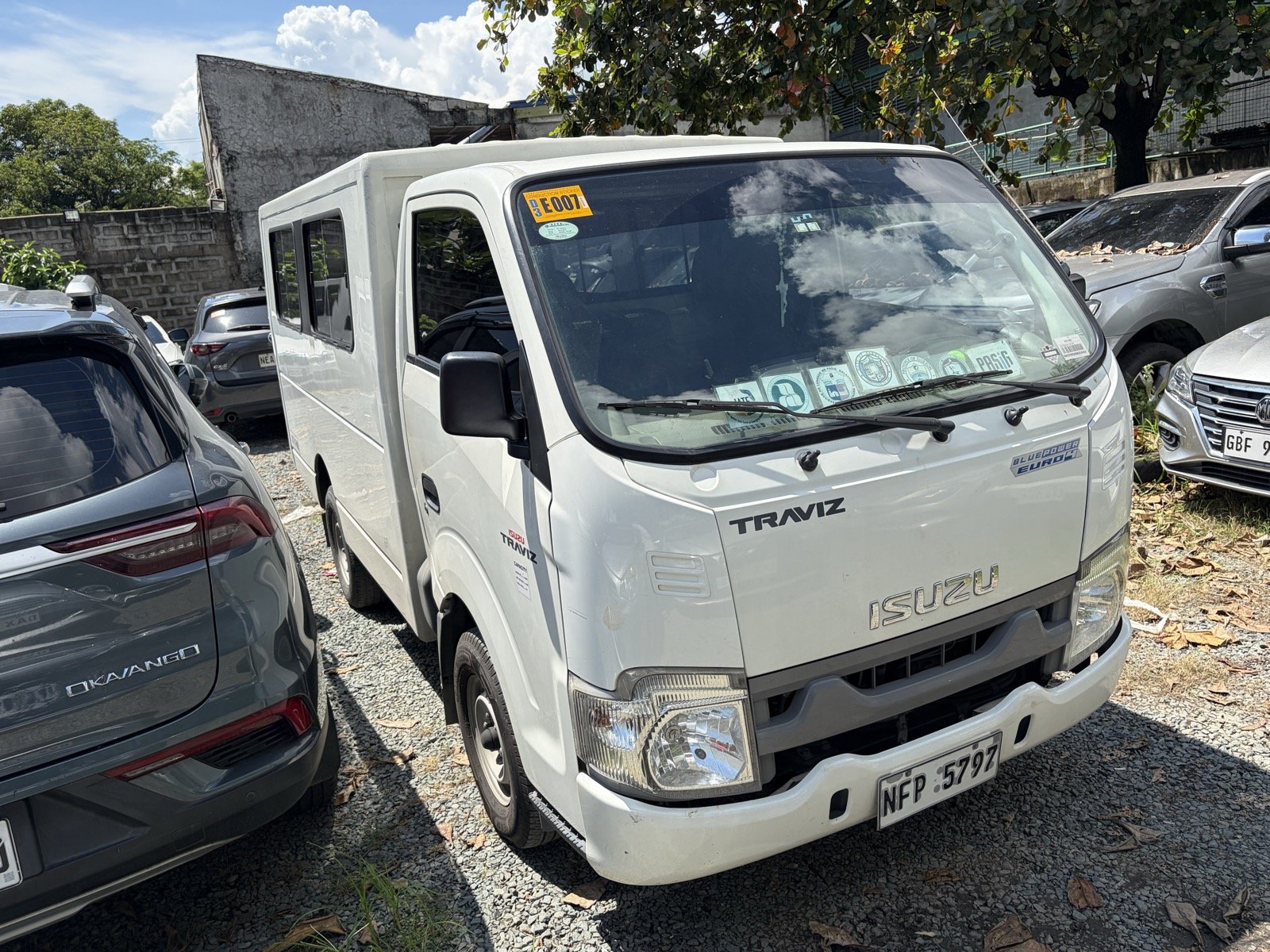
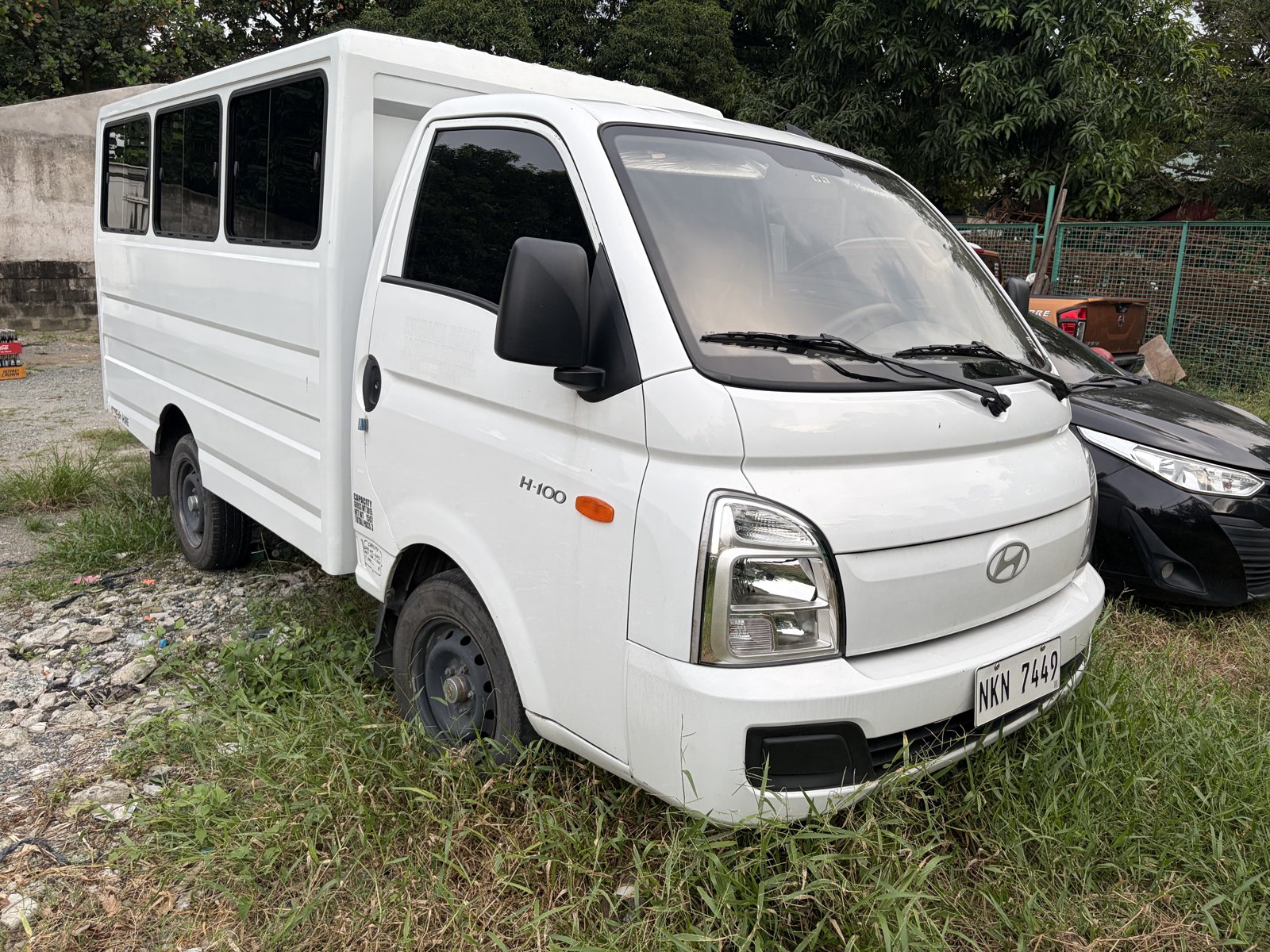
The L300 is the cheapest of the three to run and repair, the Hyundai H100 is the most powerful and comfortable, and the Isuzu Traviz is the newest design with the longest bed in its L form.
| Mitsubishi L300 (2017 on) | Hyundai H100 | Isuzu Traviz | |
|---|---|---|---|
| Engine | 2.2 turbo-diesel, Euro 4 | 2.5 CRDi turbo-diesel, Euro 4 | 2.5 diesel, Euro 4 |
| Published output (approx.) | About 100 PS / 200 Nm | About 130 PS / 255 Nm | Lowest of the three, tuned for low-rev pulling |
| Cab layout | Cab-over (engine under the seats) | Semi-bonneted (short nose) | Semi-bonneted |
| Gearbox | 5-speed manual | 6-speed manual (recent units) | 5-speed manual |
| Body options | FB, FB Exceed, dual AC, aluminum van, cab-chassis | Shuttle, aluminum van, dropside, FB, cab-chassis | FB, aluminum van, dropside, cab-chassis; L or S wheelbase |
| Strongest point | Lowest running cost, parts in every town | Power and cabin comfort | Longest bed (L), newest design |
| Watch for | Cabin heat, oil leaks on the older 2.5 | Injectors and clutch on high-km units | Fewer used units, so prices stay higher |
| In our stock (October 2026) | 2023 FB Dual AC at ₱460,000 | 2022 at ₱460,000; 2025 at ₱590,000 | 2023 Traviz L at ₱640,000 |
The H100 is the one to cross-shop if your loads are heavy or your routes are long; our used Hyundai H100 review covers its bodies, prices and known issues. If you are not yet sure a truck is the right shape at all, the guide to the best used vans for business compares trucks against proper vans on cost per peso.
L300 in stock
As of October 2026 we have one Mitsubishi L300 on the lot, a 2023 FB Dual AC, and several close alternatives if it is spoken for by the time you read this.
- 2023 Mitsubishi L300 FB Dual AC MT, listed at ₱460,000 (October 2026). Euro 4 2.2 engine, windowed FB body, rear AC.
- 2022 Hyundai H100 MT, closed cargo body, listed at ₱460,000 (October 2026). Same money, more power, a box instead of windows.
- 2023 Isuzu Traviz L, listed at ₱640,000 (October 2026). The longest bed of the three.
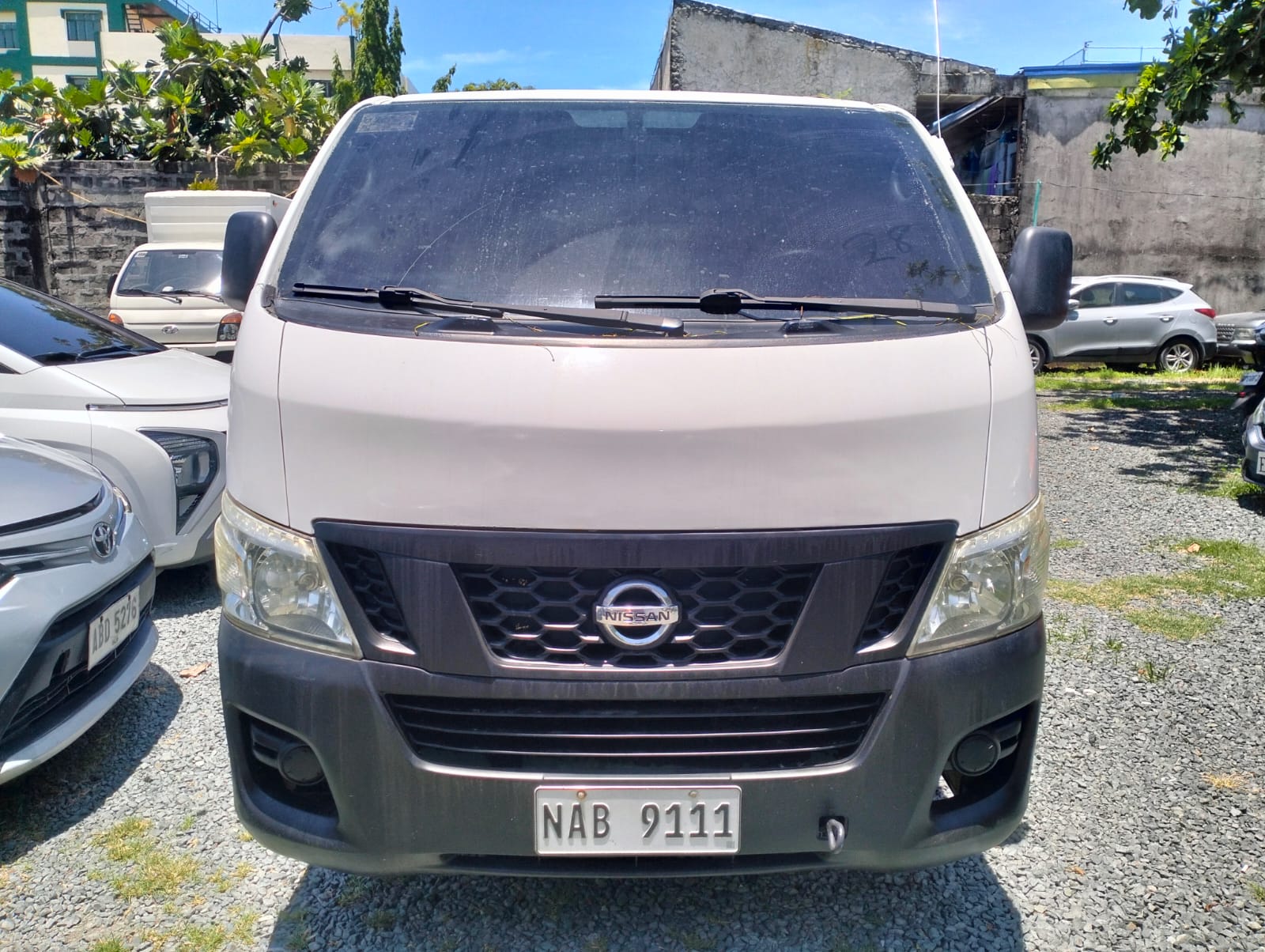
- 2016 Nissan Urvan NV350 18 seater MT, listed at ₱460,000 (October 2026). A proper passenger van for shuttle work where a bodied truck feels too rough.
Stock moves weekly, so check the live L300 search and the wider van listings before you drive over. If you are replacing an old L300, we also buy cars, bodied units included.
FAQ: used Mitsubishi L300 questions we hear most
Is the Mitsubishi L300 still worth buying in 2026?
Yes, if you need a cheap-to-run cargo or shuttle vehicle and comfort is secondary. The L300 is still sold new in the Philippines, parts are available everywhere, and the 2017-onward 2.2 Euro 4 engine fixed the old model's two weak points: power and fuel economy. Buy a recent FB unit with a clean CR rather than a tired old 2.5.
How much is a used L300 FB in the Philippines?
Recent Euro 4 units with a finished FB body are the most expensive L300s on the used market. On our Parañaque lot in October 2026 a 2023 Mitsubishi L300 FB Dual AC MT is listed at ₱460,000. Older 2.5-engine units sell for much less, but their price depends almost entirely on engine and body condition, so inspect before you offer.
L300 vs H100: which should a small business buy?
Buy the L300 if the lowest running cost and the simplest repairs matter most, or if you need a long bed in a short overall length. Buy the H100 if you carry heavier loads, drive long routes or want a quieter, cooler, more powerful cab. Both are rear-wheel-drive diesel manuals that take the same FB, van and dropside bodies.
What should I check on a used L300?
Start it cold and watch the smoke, lift the engine cover and look for oil leaks and a worn gasket, test the clutch under load, check the rear leaf springs for sag, feel for steering play, and look for rust in the floor and body welds. Then confirm the CR matches the engine and chassis numbers and carries no unreleased encumbrance.
How fuel efficient is the L300?
Owners commonly report around 10 to 12 kilometres per litre from the 2.2 Euro 4 engine in mixed Metro Manila driving with a moderate load, and somewhat less from the older 2.5 non-turbo diesel. Load, route and tyre pressure change that number more than the engine does, so treat any figure as a starting point rather than a promise.