
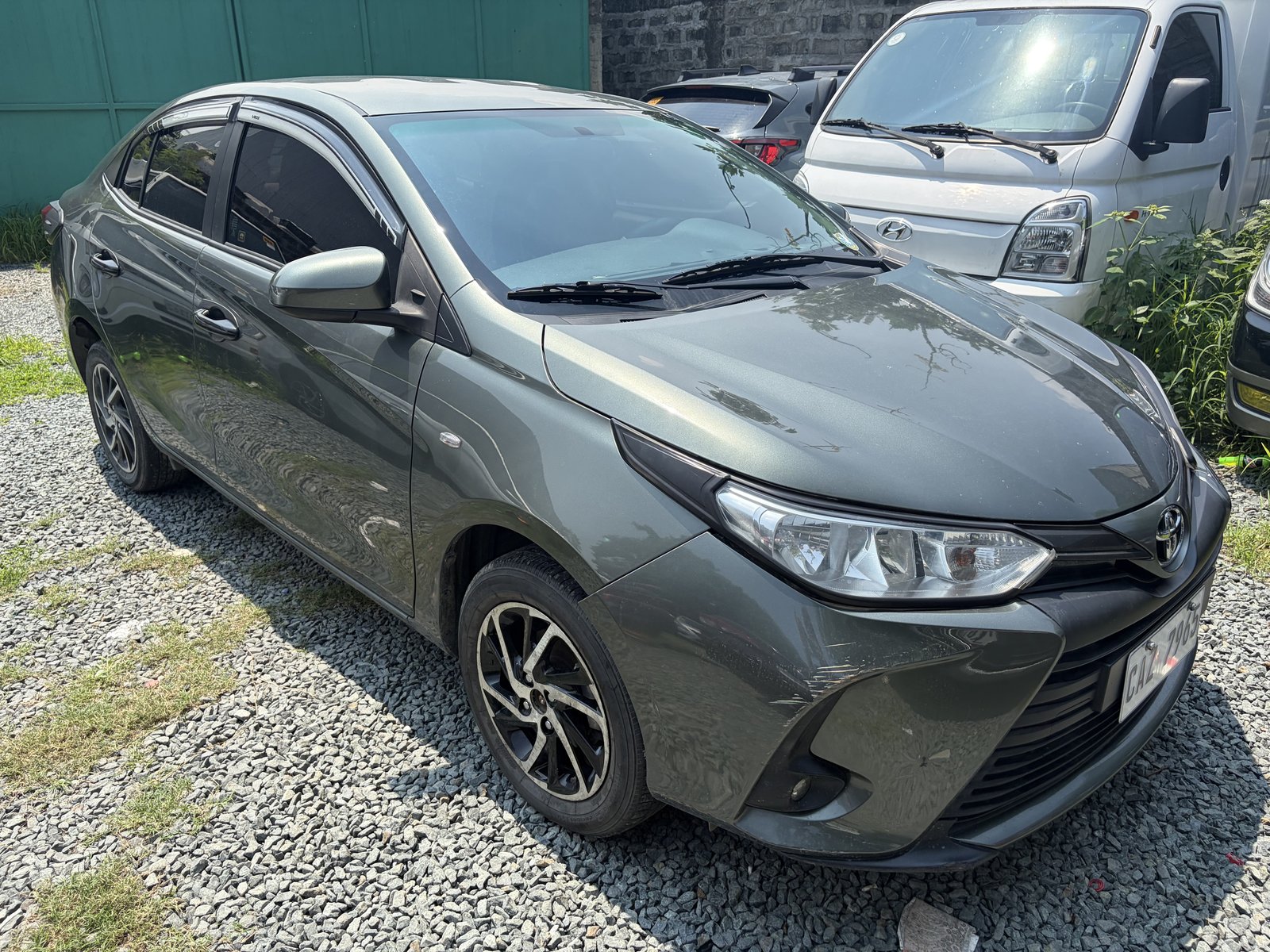
Toyota Vios vs Honda City is the small-sedan question we hear most often at the lot, and the honest answer is that both are good used cars. The decision comes down to what you value: the Vios is the market's safe bet, the City is the more capable car, and the price gap between them is smaller than most buyers expect.
This guide compares the two the way we do when a buyer asks us across the table: real used prices from our Parañaque stock, engines and fuel economy in Metro Manila traffic, space, the CVT question, running costs and resale.
Quick verdict
The Toyota Vios is the safer money decision and the Honda City is the nicer car to live with, and that one sentence settles most Vios vs City arguments. The Vios wins on resale, parts cost and the number of mechanics who know it; the City wins on power, rear-seat room and boot space.
Here is the head-to-head for the used examples you will actually find in the Philippines: the Vios sold here since 2013 and refreshed several times (most recently in 2023), and the 2014 to 2020 City that makes up most used City stock.
| Toyota Vios (used, 2016–2024) | Honda City (used, 2014–2020) | |
|---|---|---|
| Engines | 1.3 Dual VVT-i (about 99 PS) or 1.5 Dual VVT-i (about 107 PS) | 1.5 i-VTEC (about 120 PS) |
| Transmissions | 5-speed manual or CVT (4-speed automatic on pre-2016 cars) | 5-speed manual or CVT |
| Boot space | Roughly 478 litres | Roughly 536 litres |
| City fuel economy (owner-reported) | Roughly 10–14 km/L in Metro Manila traffic | Roughly 10–14 km/L, tending to the lower end |
| Parts and servicing | Cheapest and widest in the segment | Widely available, generally a little pricier |
| Resale value | Strongest in the segment | Strong, a step behind the Vios |
| On our lot, October 2026 | Five units from ₱235,000 to ₱600,000 | One unit at ₱381,000 |
| Best for | First car, TNVS, buyers who will sell within five years | Families, long-term keepers, drivers who want more power |
Used prices compared
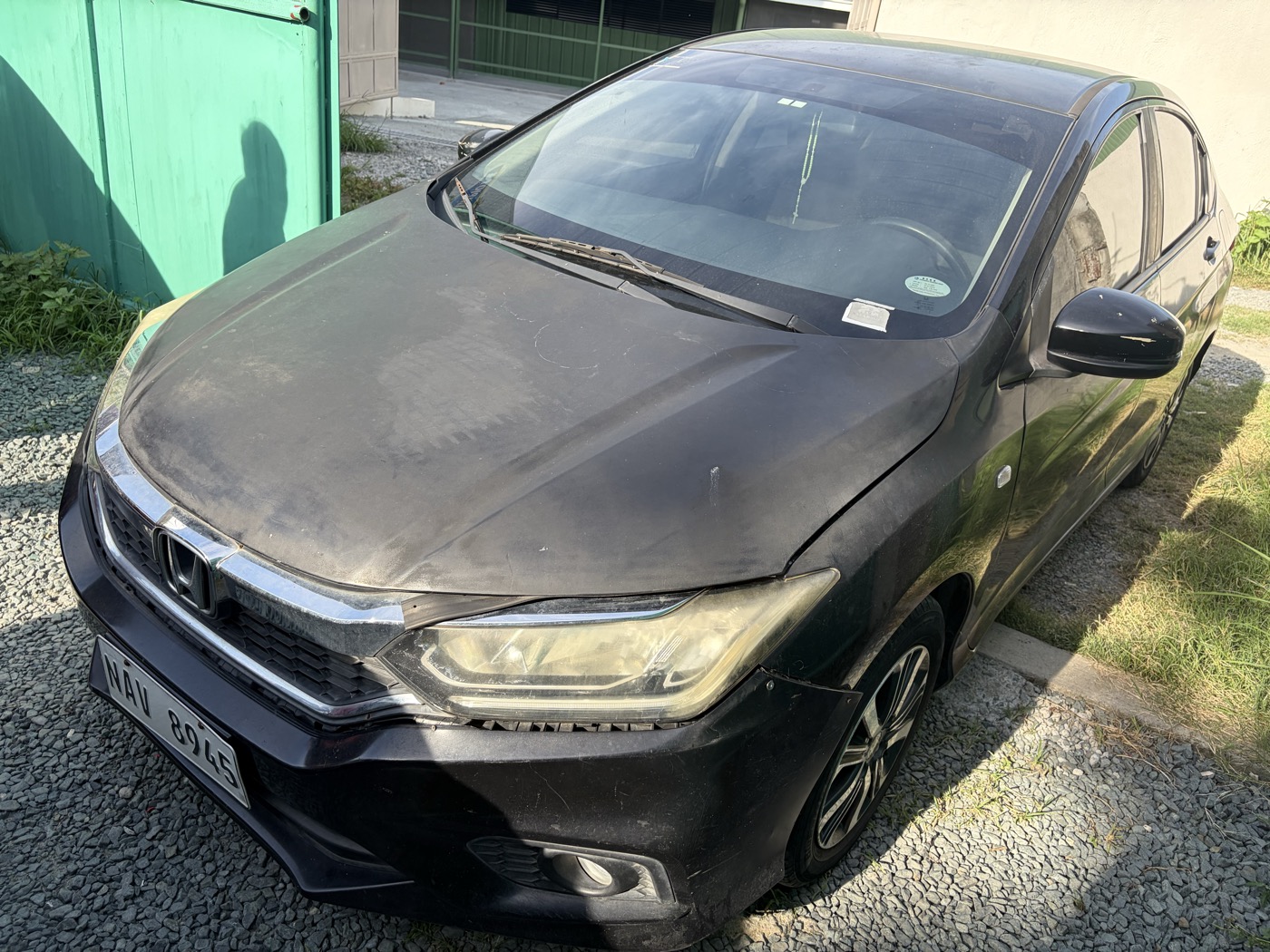
On our lot in October 2026 a used Vios runs from ₱235,000 for a 2016 manual to ₱600,000 for a 2024 CVT, while the one City we have, a 2018 1.5 VTEC automatic, is listed at ₱381,000. Year, variant, mileage and transmission move the price far more than the badge does.
- 2016 Toyota Vios 1.3 J MT — listed at ₱235,000, 129,746 km. The budget door into a Vios.
- 2019 Toyota Vios 1.3 E MT — listed at ₱250,000. A later manual with the Dual VVT-i engine.
- 2018 Honda City 1.5 VTEC AT — listed at ₱381,000. Honda's CVT automatic with the 1.5 i-VTEC.
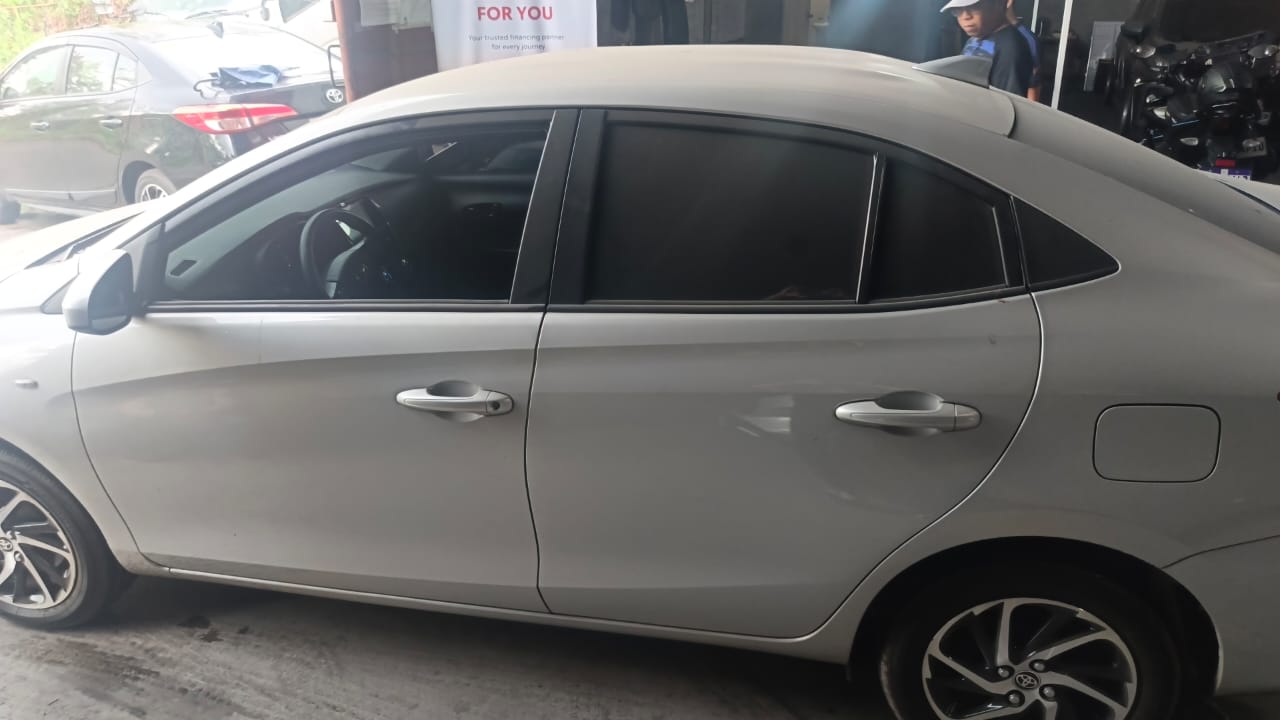
- 2023 Toyota Vios 1.3 XLE CVT — listed at ₱495,000, 25,454 km. The current-shape Vios with the CVT.
- 2024 Toyota Vios 1.3 XLE CVT — listed at ₱530,000, 40,475 km. Same variant, a year newer.
- 2024 Toyota Vios 1.3 XLE CVT — listed at ₱600,000, 17,910 km. The lowest-mileage Vios on the lot.
Like for like, a used City is usually a little cheaper than a Vios of the same year and condition, because the market pays a premium for the Toyota badge at resale time. That premium is real money when you sell, which is why the City is often the better value when you buy. Our used Honda City buying guide covers the variants and years in detail.
Engines and fuel economy (1.3/1.5 Dual VVT-i vs 1.5 i-VTEC)
The City's 1.5 i-VTEC makes noticeably more power than the Vios 1.3, but in Metro Manila traffic both return similar real-world fuel economy. Power matters on the expressway and with four people aboard; it matters very little at 15 km/h on EDSA.
Dual VVT-i and i-VTEC are Toyota's and Honda's names for variable valve timing, which lets a small engine breathe well at both low and high revs. From the 2016 refresh the Vios uses the 1.3 Dual VVT-i (about 99 PS) or the 1.5 Dual VVT-i (about 107 PS); earlier 2013 to 2016 cars used older engines with a 4-speed automatic. The City's 1.5 i-VTEC makes about 120 PS across the 2014 to 2020 range.
Owners commonly report roughly 10–14 km/L from either car in city traffic and 17 km/L or better on a highway run. The Vios 1.3 tends to land at the upper end of that band and the City 1.5 at the lower end, but driving style, aircon use and tyre pressure move the number more than the badge. Our guide to fuel-efficient used cars explains how to read km/L claims honestly.
Space, comfort and features
The City is the roomier car: a longer wheelbase, more rear legroom and a boot of roughly 536 litres against the Vios' roughly 478. If you carry adults in the back or load up for a provincial trip, the Honda is the one that feels a size bigger.
The Vios answers with a softer ride over broken concrete and a cabin that stays quieter as it ages. Feature content depends on variant more than model: a City VX or a Vios G gets the touchscreen, alloys and extra conveniences, while an E or a J keeps things basic. Later Vios variants added more airbags across the range, so check the specific year and variant you are viewing rather than assuming.
Sit in both. The City's low seating and wide dash feel sportier; the Vios' upright seat and thin pillars are easier to park in a tight Parañaque street. Neither is wrong, and this is the one area where personal preference should decide.
Reliability and the CVT question
Both are among the most reliable used sedans in the Philippines, and the CVT in either is dependable as long as the fluid has been changed on schedule. Neither engine has a reputation for serious trouble; the risks in a used example are neglect, flood exposure and a tampered odometer, not the design.
A CVT (continuously variable transmission) uses a belt between two variable pulleys instead of fixed gears. The Vios adopted one at its 2016 refresh; the City has used Honda's CVT since 2014. Owners of early City CVT units commonly report a low-speed judder that a fluid change and software update usually addressed, so ask for the service history on a 2014 to 2016 car. Vios owners commonly report nothing more dramatic than wear items.
Whichever you choose, drive it from cold and feel for shudder under light throttle, delayed engagement into Drive and a whine that rises with road speed. We walk through every check in our CVT reliability guide and the full test drive checklist.
Running costs and parts
The Vios is cheaper to keep: Toyota parts are the most plentiful in the country, surplus and aftermarket options are everywhere, and almost every talyer (independent repair shop) has worked on one. That matters more over five years of ownership than a small difference in purchase price.
The City is not expensive by any standard. Honda parts are widely available and the engine asks for nothing unusual, but body panels, lamps and some electronics tend to cost a little more than the Toyota equivalents, and fewer surplus parts exist. Insurance and LTO renewal are nearly identical because both are small-displacement sedans.
Casa servicing is reasonable for both; a trusted talyer is cheaper still once the car is out of its early years. For the full picture of fuel, PMS, insurance and depreciation, see our guide to the total cost of car ownership in the Philippines.
Resale value
The Vios holds its value better than the City, and better than almost any other small sedan sold in the Philippines. Demand from first-time buyers, fleet operators and TNVS drivers never dries up, so a clean Vios sells quickly at a strong price at any age.
The City loses more in its first few years, then flattens out. That curve is exactly why a three- to six-year-old City is often the smarter purchase: the first owner absorbed the steep part. If you plan to keep the car for a long time, the City's early depreciation is someone else's problem. If you plan to sell within five years, the Vios protects your money better.
Mileage and papers move resale as much as the badge. A high-kilometre Vios with a clean OR/CR will still outsell a low-kilometre car with a question mark on its documents; our guide on high mileage vs old car explains how to weigh the two.
Vios and City units in stock
In October 2026 we have five Toyota Vios and one Honda City on the lot in Parañaque, every one inspected and with documents verified before listing. Browse the Vios units or the Honda City on the site, or compare them side by side on a visit.
Every unit is sold as-is, where-is through a sealed offer: you send a private offer that no other buyer sees, and we confirm, counter or accept. Full payment comes before release, and the OR/CR and transfer documents follow 2–4 weeks after full payment. Financing is available from 1.40% per month add-on rate, subject to credit approval, with a 6.95% one-time chattel and processing fee on the amount financed; the financing page has the details, and how it works walks through the whole process.
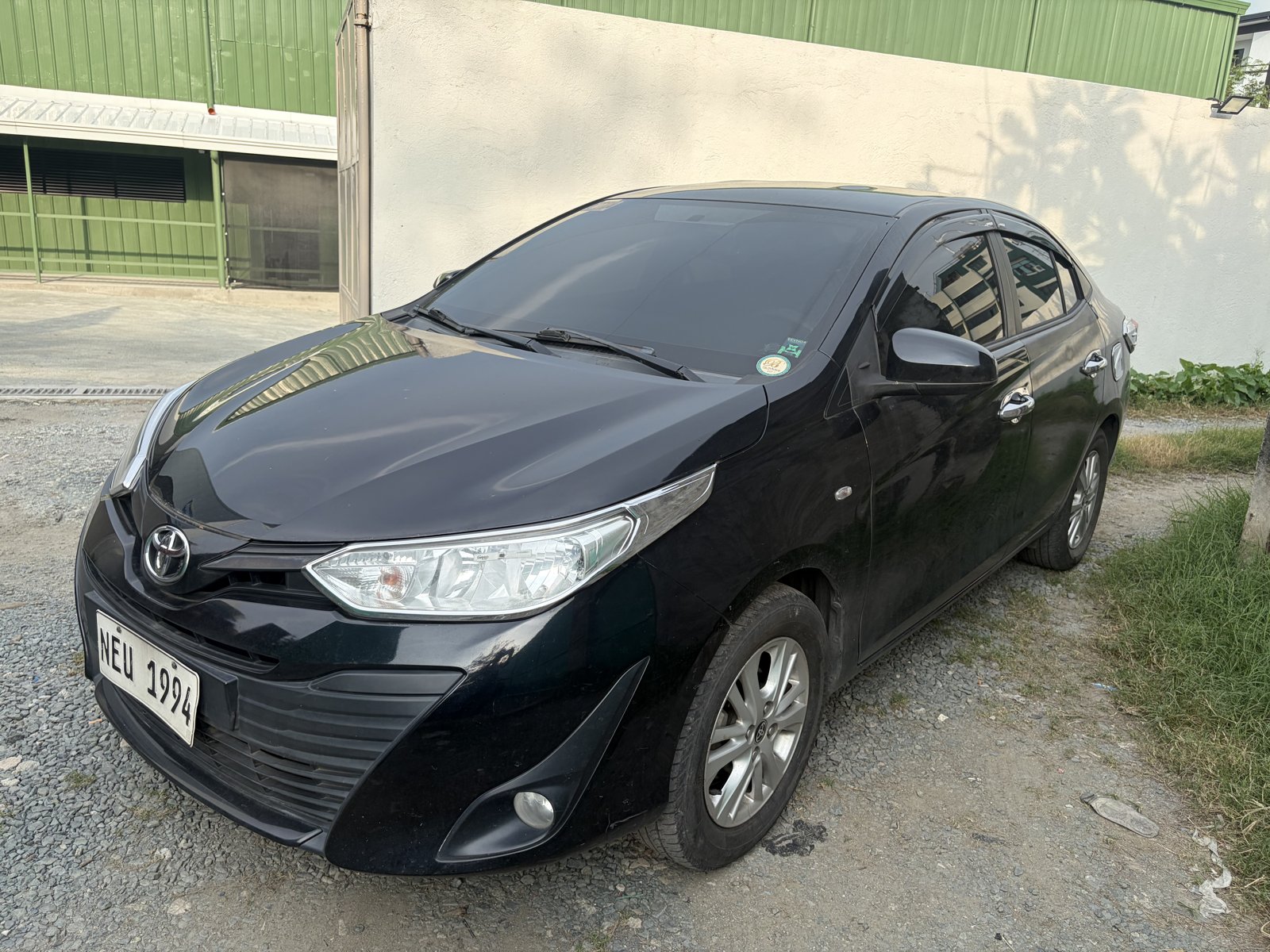
If you are still torn, read our used Toyota Vios buying guide next, then book a viewing and drive both back to back. We are open Monday to Saturday, 9 AM to 6 PM, by appointment.
FAQ: Vios vs City questions buyers ask
Which is more reliable, the Toyota Vios or the Honda City?
Both are among the most reliable used sedans in the Philippines, and neither has a reputation for serious engine problems. The Vios edges it on parts availability and the number of mechanics who know it, while the City's 1.5 i-VTEC is equally durable. Condition and service history matter more than the badge: a well-kept City will outlast a neglected Vios.
Which is more fuel efficient, Vios or City?
In Metro Manila traffic owners commonly report roughly 10–14 km/L from both, with the Vios 1.3 tending to land slightly higher because of its smaller engine. On the highway both can pass 17 km/L. Driving style, aircon use and tyre pressure move the number more than the badge does, so test the car you are actually buying.
Which holds its value better, Vios or City?
The Toyota Vios holds its value better than the Honda City and better than almost any small sedan in the Philippines, because demand from first-time buyers and TNVS drivers never dries up. The City loses more in its early years, which is exactly why a three- to six-year-old City is often the better value buy.
Which is cheaper to maintain, Vios or City?
The Vios is generally cheaper to maintain. Toyota parts are the most plentiful in the country, surplus and aftermarket options are everywhere, and nearly every talyer has worked on one. Honda City parts are widely available too but tend to cost a little more. Both are inexpensive by any standard as long as the CVT fluid is serviced on time.
Is the Vios or the City better for Grab?
The Vios is the default Grab and TNVS car in the Philippines for good reason: lowest running cost, easiest parts, strongest resale and a 1.3 engine that sips fuel in traffic. The City works too and is more comfortable for passengers, but its resale and parts costs make the Vios the better business decision. Check current LTFRB vehicle requirements before you buy.