
The odometer is the one number every used-car buyer fixates on, which is exactly why it gets faked. In the Philippine second-hand market, "rolling back" the reading to make a tired car look barely driven remains one of the oldest tricks around. A lower number can add tens of thousands of pesos to an asking price, so the temptation is real.
The good news: a rolled-back car almost always gives itself away if you know where to look. This guide walks through the wear clues, the paper trail, the digital tells, and the simple math that catches most cases. It is the same approach we use before any unit reaches our Parañaque lot.
- Why mileage fraud persists in the PH market
- The wear clues: pedals, steering wheel, seats
- Paper checks: service records and casa history
- Digital odometers: easier to roll than you think
- Mileage-per-year sanity math
- What honest mileage looks like at each price point
- What to do if you suspect tampering
- FAQ
Why mileage fraud persists in the PH market
Mileage moves money. Two identical units, same year and variant, can differ by a large amount purely on the reading. That gap is the whole incentive.
Several things keep the practice alive locally. Many private sales happen fast and cash-in-hand, with little paperwork changing hands. Casa service records are patchy once a car leaves warranty, because owners switch to neighbourhood shops that never log mileage anywhere central. And there is no single public database you can query to confirm a reading, unlike some overseas markets.
Former fleet, rental and ride-hailing units are the highest-risk group. A car that ran as a daily earner in NCR traffic can rack up enormous distance in just a few years, so the incentive to shave the number before resale is strongest there. This is why we always cross-check condition against the claimed figure rather than taking any dashboard at face value. If you are still weighing age against distance, our guide on high mileage vs an old car is a useful companion read.
The wear clues: pedals, steering wheel, seats
Numbers can be rewritten in minutes. Physical wear takes years to build and cannot be undone cheaply, so it is your most honest witness. Walk around the car and touch the parts a driver's body actually contacts.
Inside the cabin
- Steering wheel: a smooth, shiny, slightly greasy rim on a car claiming very low kilometres is a classic mismatch. Real low-mileage wheels still feel textured.
- Pedals: look at the rubber pads. Deeply worn or freshly replaced pedals under a low reading are suspicious, especially the brake and accelerator.
- Driver's seat: a collapsed bolster, sagging cushion or shiny fabric on the driver's side tells you someone spent a lot of hours in that seat.
- Gear knob and buttons: a worn-shiny shift knob, faded window switches and a rubbed-off engine-start button all point to heavy use.
Outside and under the hood
Check the tyres: a car with three or four different tyre brands, or fresh rubber on a "low-mileage" unit, has covered real distance. Look at the tyre date codes too. Around the door jambs and under the hood, a service sticker from an oil-change shop often lists the mileage at last service — compare it to the dashboard now.
Paper checks: service records and casa history
Wear tells you the car has been used hard; paper tells you how hard, and when. Ask for every scrap of history the seller has and lay it out in date order.
- Service booklet and casa printout: each stamp usually records the mileage on that date. Read them in sequence. The numbers should climb steadily. A reading that suddenly drops, or flatlines for years and then resumes, is the signature of a rollback.
- Preventive-maintenance receipts: even non-casa shops write mileage on the invoice. Line them up against the odometer today.
- Change-oil stickers: the little sticker on the windshield or door jamb often survives longer than the paperwork and quietly contradicts a tampered dash.
- LTO and insurance papers: the OR/CR and past comprehensive-insurance documents can carry clues about the car's real history and prior use.
Verifying the documents themselves matters just as much as the mileage — our walkthrough on how to verify LTO records covers checking the OR/CR, plate and encumbrance status before you pay a peso. At RideAgain, every unit's paperwork is confirmed before we list it, and OR/CR transfer is handled after full payment.
Digital odometers: easier to roll than you think
Many buyers assume a modern digital cluster is tamper-proof. The opposite is often true. A mechanical odometer at least leaves misaligned number wheels or scratch marks when someone forces it. A digital reading is just a value stored in a memory chip.
With a cheap tool plugged into the OBD-II port, a technician can rewrite that value in minutes, leaving no spinning parts and no visible scars. Some jobs are sloppy and throw a warning light or leave inconsistent readings between the dash and other modules, but a clean rollback shows nothing on the screen.
That is the key lesson: never trust the screen on its own. On a digital car, your defence shifts even more heavily onto wear, service history and independent records. If the cabin looks like a workhorse but the display says otherwise, believe the cabin.
Mileage-per-year sanity math
Before you even inspect a car, do a thirty-second sanity check. As a rule of thumb in the Philippines, a normally used private car covers roughly 15,000 to 20,000 kilometres per year. A daily NCR commuter or a former fleet unit runs higher; a weekend-only second car runs lower.
Multiply the car's age by that range and see whether the odometer fits. A reading far below the low end on a car with heavy cabin wear is a warning. A reading that fits, backed by matching wear and paperwork, is reassuring.
| Vehicle age | Typical honest range (approx.) | Be suspicious if the dash shows |
|---|---|---|
| 3 years | ~45,000–60,000 km | under ~20,000 km with worn controls |
| 5 years | ~75,000–100,000 km | under ~35,000 km with a shiny wheel |
| 7 years | ~105,000–140,000 km | a suspiciously round, very low figure |
| 10 years | ~150,000–200,000 km | under ~60,000 km with heavy seat wear |
These are estimates for context only, not guarantees — genuinely low-mileage cars do exist, especially garaged second vehicles. The point is that the number, the wear and the paper trail should all tell the same story. When one disagrees loudly with the other two, slow down.
What honest mileage looks like at each price point
Price sets a rough expectation for distance. A near-new car commanding a strong price should genuinely show light use; a budget unit will honestly wear its kilometres, and that is fine as long as the reading and the wear agree.
Take a recent-model daily sedan such as this 2025 Toyota Vios XLE CVT — listed at ₱540,000 (July 2026). At that price and age you should expect a tidy cabin, a lightly used wheel and a reading that lines up with a car only a year or two old. If a unit at a similar price shows a beaten interior, ask why the number is so low.
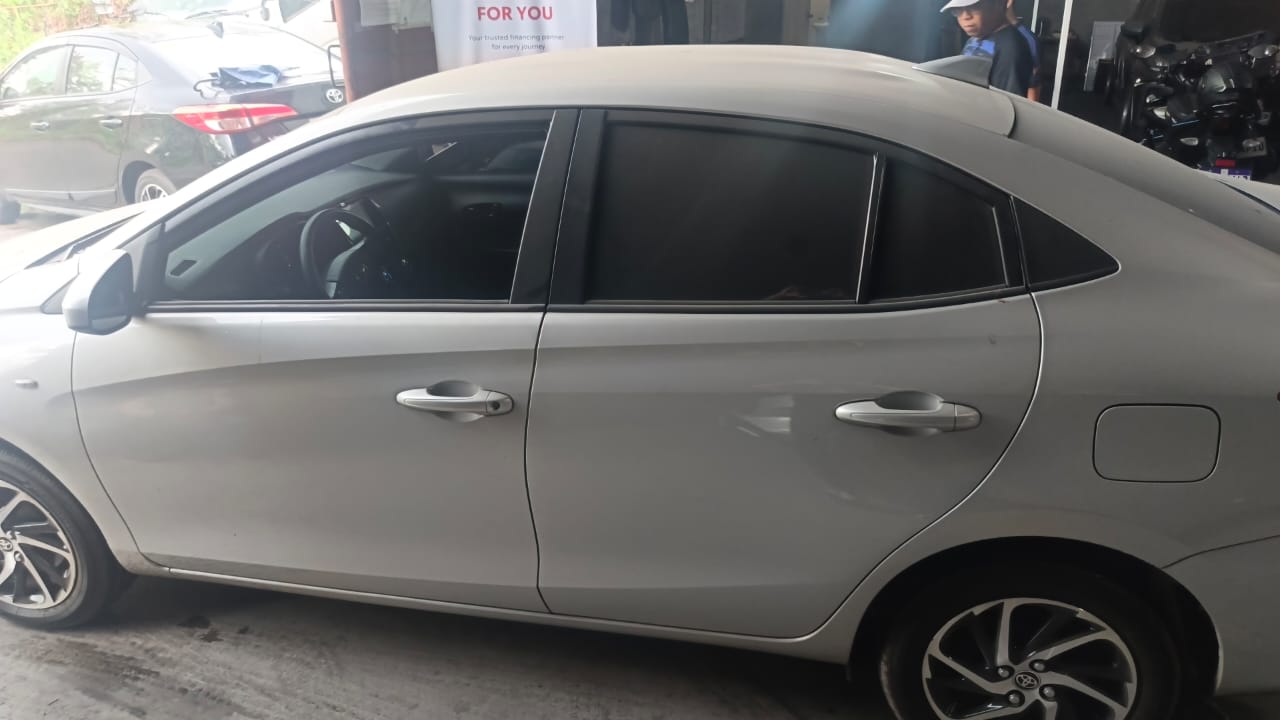
Lower down the ladder, an older or budget car with a higher, believable reading and matching wear is often the more honest buy. Browse the current Vios in stock or the wider Mirage line-up and you will see how age, price and expected distance move together. What you want to avoid is the unit priced like a low-mileage car but wearing like a high-mileage one.
What to do if you suspect tampering
If something feels off, do not argue about the number on the spot — just verify calmly and walk if it does not add up.
- Slow the sale down. Ask for the full service history and time to inspect. A seller who resists is telling you something.
- Book a proper viewing. Inspect in daylight, ideally with a trusted mechanic, and run through a full test-drive checklist so nothing gets missed.
- Cross-check the paper trail. Line up stamps, receipts, stickers and LTO documents against the dash reading.
- Have the cluster scanned. On digital cars, a diagnostic read can sometimes flag inconsistencies between modules.
- Walk away if in doubt. There will always be another car. Overpaying for hidden high mileage is far costlier than losing a deposit.
Buying from us removes most of this guesswork. Every RideAgain unit is checked and its papers verified before listing, each car carries a clear guide price, and you buy through a private sealed offer — no bidding wars, no pressure. You can read exactly how it works or explore financing from lending partners (from 1.40% per month add-on, subject to credit approval). Selling instead of buying? We also buy cars with a fast, market-based valuation.
Book a viewing at our Parañaque lot →
FAQ: odometer tampering
How do I know if the odometer was rolled back?
Compare the reading against the car's wear. A worn steering wheel, shiny gear knob, sagging driver's seat and heavily rubbed pedals on a car showing low kilometres are red flags. Then cross-check service stamps, LTO records and any casa printout for mileage that jumps around or stops updating. When the story on paper does not match what your hands and eyes find, treat the number as unreliable.
Is odometer tampering illegal in the Philippines?
Yes. Rolling back a reading to misrepresent a vehicle's true mileage is a form of fraud and deceit against a buyer, and any related document falsification carries its own penalties under Philippine law. The practical problem is enforcement: proving intent after a sale is hard, so most buyers never recover their money. Prevention through careful inspection is far more reliable than chasing a case later.
What is normal mileage per year for a used car?
As a rule of thumb in the Philippines, count on roughly 15,000 to 20,000 kilometres per year for a normally used private car. A daily NCR commuter or a former grab or fleet unit can easily exceed that, while a weekend-only second car may run far less. Multiply the age by that range to get a sanity figure, then check whether the odometer reading fits.
Can digital odometers be tampered with?
Yes, and often more easily than old mechanical dials. A digital cluster stores mileage in a chip that a technician can rewrite in minutes with a cheap tool plugged into the OBD port. There are no spinning wheels to leave tell-tale scratches, so the only defence is cross-checking the reading against service history, wear and independent records rather than trusting the screen.
Still comparing options? Browse our full stock of pre-owned cars or read more buying guides on the RideAgain blog.