If you run a sari-sari store, drive for a delivery app, sell online, freelance, or own a small trade business, you have probably heard that a car loan for self-employed applicants is "harder." It is not impossible, and it is not even that hard once you know what lenders actually want to see.
The catch is simple: you do not have payslips or a certificate of employment. So the whole game becomes proving your income another way. This guide walks through the documents that replace payslips, how freelancers and online sellers show cash flow, and why a bigger down payment quietly fixes most weak files.
Why lenders treat self-employed income differently
An employed applicant hands over a payslip and a certificate of employment, and the lender instantly sees a fixed monthly figure they can count on. Your income does not arrive in one neat, employer-stamped number, so the lender has to reconstruct it.
That is really the only difference. The bank or financing company is not judging your hustle. It is measuring two things: how steady your money is, and whether the monthly amortisation fits inside that cash flow with room to spare. Self-employed income is often lumpy — big weeks, quiet weeks — so lenders want a longer look-back to feel confident.
Understand that framing and everything else follows. Your job is to make irregular income look regular on paper. Everything below is a tool for doing exactly that. For the shared basics that apply to every buyer, our car loan requirements in the Philippines guide is a good companion read.
The document stack: ITR, bank statements, permits
Here is the core set most lenders ask a self-employed applicant to submit. You will rarely need every item, but the more of it you can produce, the stronger your file.
- Income Tax Return (ITR). Your latest filed ITR (BIR Form 1701 or 1701A) is the single cleanest proof that you earn what you say you earn. It is the item lenders miss most when it is absent.
- Bank statements. Six to twelve months, ideally from an account where your business income lands. This is often the deciding document — it shows real, dated cash flow.
- Business registration. DTI certificate (sole proprietor) or SEC registration (corporation/partnership), plus your Mayor's or business permit.
- Audited Financial Statements. Usually asked of larger or incorporated businesses, not a freelancer with one laptop.
- Valid government IDs (two, primary), and proof of billing at your current address.
The pattern to notice: the ITR and the bank statements do most of the work. Registration and permits confirm the business is real; the financial statements are for bigger operations.
| Requirement | Employed applicant | Self-employed applicant |
|---|---|---|
| Proof of income | Payslips + Certificate of Employment | ITR + bank statements |
| Proof of business/work | Not needed | DTI/SEC + Mayor's permit |
| Look-back period | Latest 1–3 months | 6–12 months of deposits |
| Typical down payment asked | From around 20% | Often 30–40% to offset risk |
| Co-maker | Rarely required | Helpful if income is thin |
Figures above are typical market practice and will vary by lender and by unit — treat them as a rule of thumb, not a promise.
Freelancers and online sellers: proving income
Freelancers, virtual assistants, online sellers and app-based drivers are the trickiest profile because the money often comes through wallets and platforms rather than a business bank account. The fix is to build a paper trail before you apply.
Consolidate your deposits
Route your earnings into one bank account. If you receive through GCash, Maya, PayPal, Payoneer or a marketplace payout, transfer to a single bank regularly. A statement that shows consistent monthly inflows tells a much cleaner story than money scattered across five apps.
Keep platform records
Screenshots and downloadable statements of your Grab, Lalamove, Shopee, Lazada, Upwork or client payouts add context to the bank deposits. They are supporting evidence, not a substitute for bank statements.
File your ITR
Even a modest registered income on a filed ITR opens more doors than a large but undocumented cash flow. If you have been operating informally, registering and filing is the highest-leverage thing you can do for future approvals.
How a bigger down payment offsets thin documents
This is the lever most self-employed buyers underuse. Every peso you put down is a peso the lender is not risking, so a larger down payment can rescue a file that is light on formal income proof.
Where an employed buyer might be approved at around 20 percent down, a self-employed applicant with a thinner paper trail often gets a clean yes at 30 to 40 percent. It also shrinks the amount financed, which lowers your monthly and makes the whole loan easier to approve.
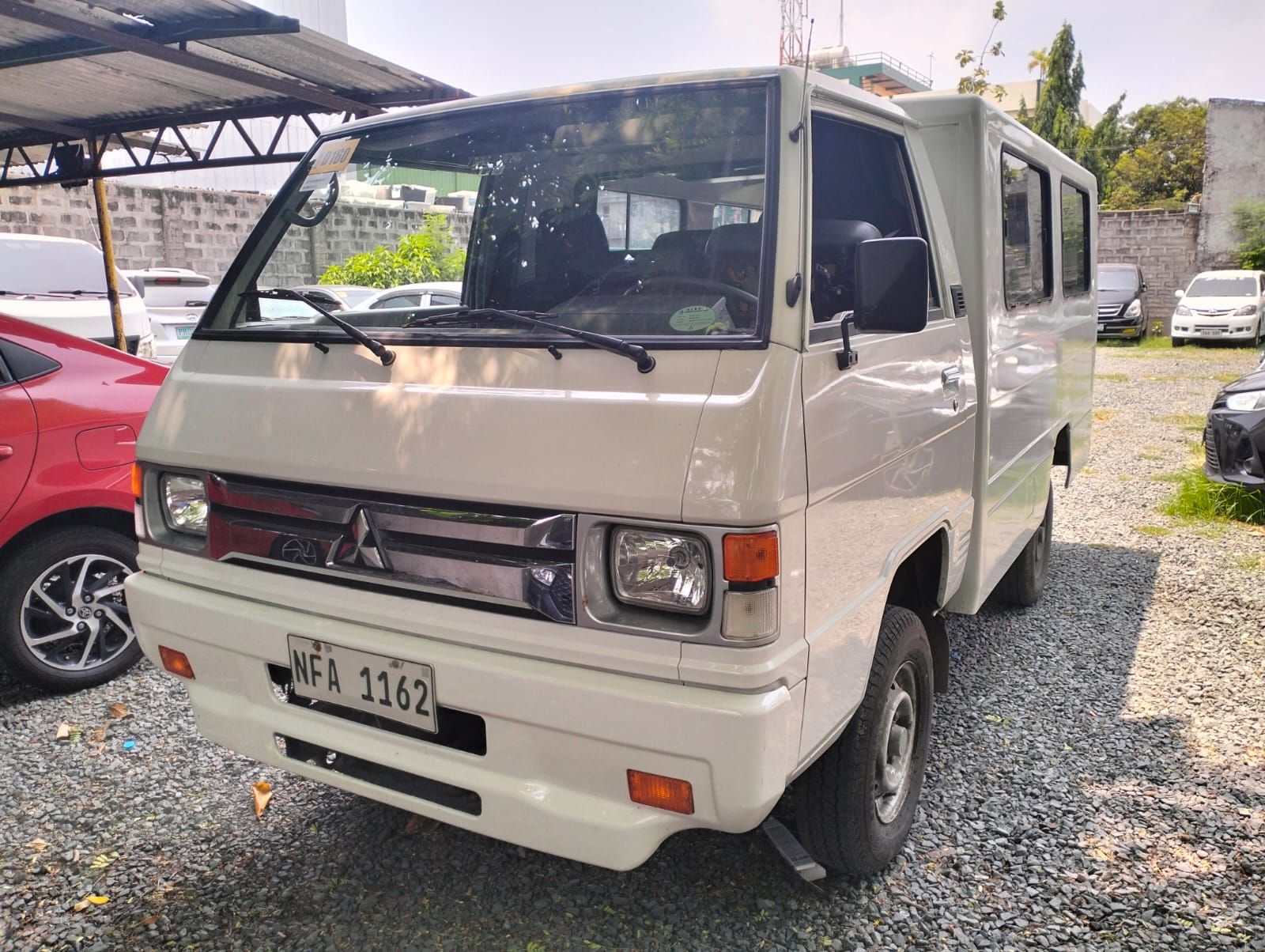
A quick illustration on the L300 above, listed at ₱480,000. Put down 30 percent (₱144,000) and you finance ₱336,000. Using an illustrative 1.40% per month add-on rate over 48 months:
- Interest = ₱336,000 × 1.40% × 48 = ₱225,792
- Total = ₱336,000 + ₱225,792 = ₱561,792
- Monthly ≈ ₱11,704 over 48 months
That is a rough, illustrative figure only — the final rate is subject to credit approval, and a one-time 6.95% chattel/processing fee applies on the amount financed. Our lending partners quote from 1.40% per month; your number depends on your profile and the unit. See the full mechanics on our financing page, and for the down-payment side specifically, our used car down payment guide.
Financing a business vehicle: vans and L300s
There is a nice advantage when the vehicle is a tool that earns. A van, an L300 or an H100 bought to run a delivery route, haul goods or serve a trade is not just an expense on your application — it is a plausible source of the very income that repays the loan. Some lenders view a productive asset more favourably than a purely personal car.
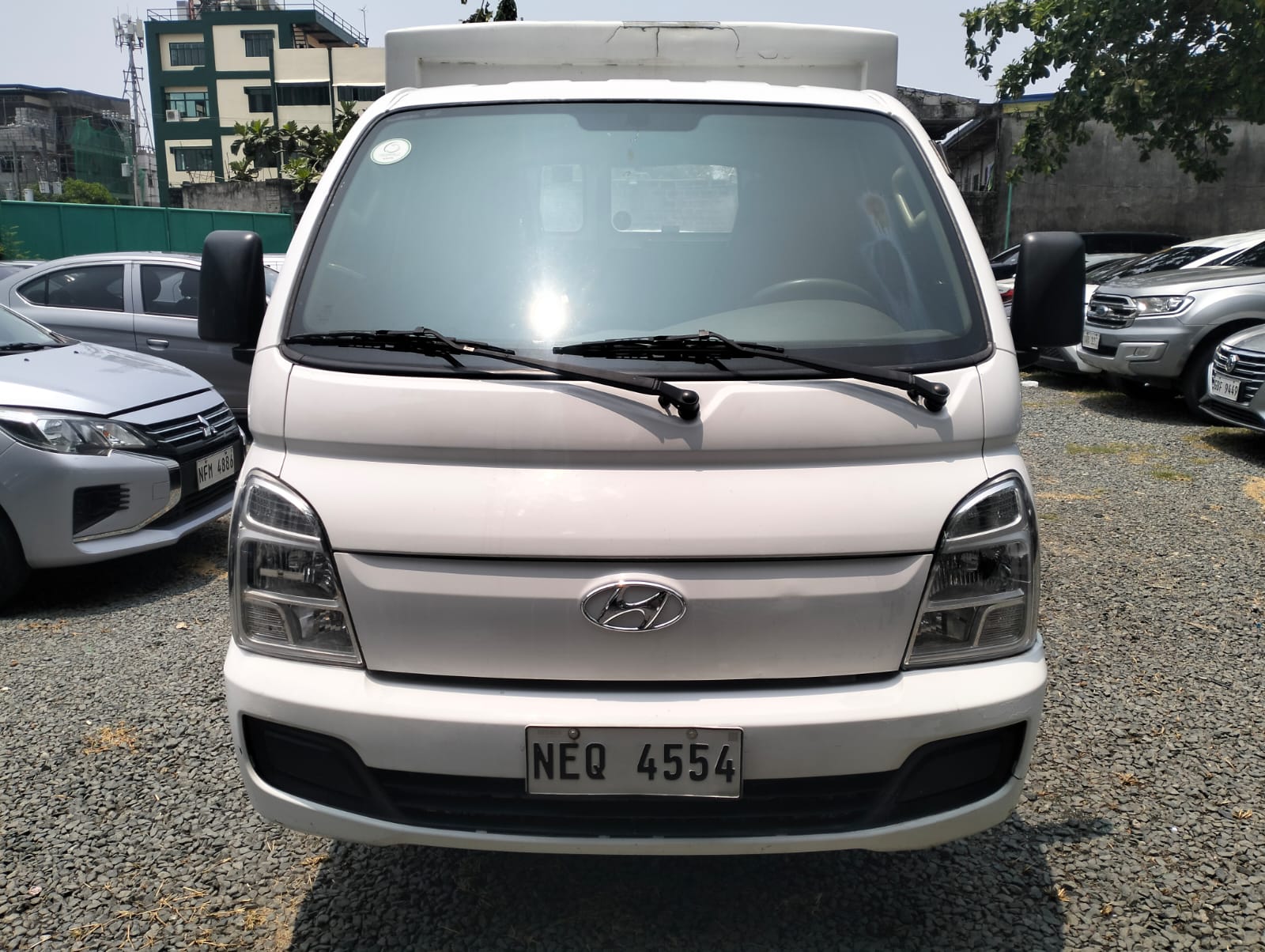
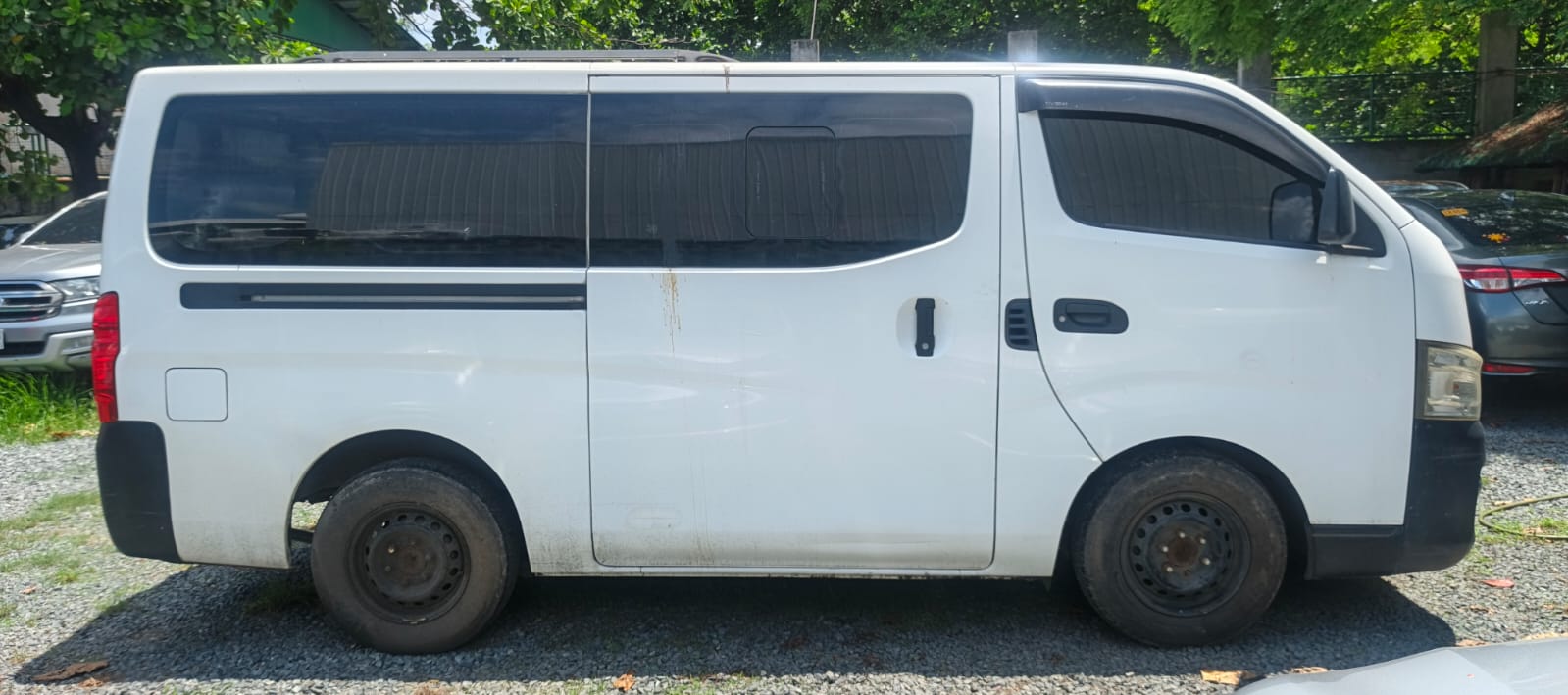
These are also priced within reach. At our Parañaque lot the 2023 Mitsubishi L300 FB is listed at ₱480,000 (July 2026), the 2022 Hyundai H100 at ₱564,000, and if you need seating capacity the 2020 Nissan NV350 Urvan is listed at ₱785,000. Browse everything in the class on our vans in stock page.
If your buying decision is really "bank or dealer-arranged financing," weigh both — our bank vs dealer car financing comparison lays out where each wins for a self-employed borrower.
Common decline reasons and how to fix them
Most self-employed declines trace back to a short list of fixable problems. Knowing them lets you patch the file before you apply, not after a rejection.
- No ITR on record. Register and file. This is the most common gap and the most worthwhile to close.
- Erratic or thin bank deposits. Spend three to six months routing income into one account so the statement shows a steady pattern before applying.
- Amortisation too high for the cash flow. Pick a cheaper unit or lengthen the term so the monthly comfortably fits your average month.
- Down payment too small. As covered above, raising it is the fastest way to turn a maybe into a yes.
- Existing debts. Clear or reduce credit-card and other loan balances; lenders look at your total monthly obligations, not just this one.
- Adverse credit history. Settle any old defaults where you can, or add a co-maker with clean, documented income.
Fix two or three of these and a previously borderline application usually clears. And remember that at RideAgain the price you see is a guide — you make a private sealed offer, we confirm or counter, and no one else sees your number. Selling your current ride first? We also buy cars and can put that toward your down payment. New to how we work? Start with how it works or just browse the full stock.
FAQ
Can self-employed people get a car loan in the Philippines?
Yes. Self-employed buyers, freelancers and small business owners are financed every day. Lenders simply verify income differently, using your ITR, bank statements and business permits instead of payslips. Approval depends on showing steady cash flow and a manageable monthly amortisation, not on having a formal employer.
What documents replace payslips for a car loan?
In place of payslips, lenders accept your latest Income Tax Return (ITR), six to twelve months of bank statements, DTI or SEC registration, Mayor's or business permit, and often audited financial statements. A valid government ID and proof of billing address round out the file. The bank statements are usually the most important item.
Do freelancers need an ITR to get financing?
An ITR is strongly preferred and makes approval far smoother. If you have not filed one, some lenders will still consider consistent bank deposits, remittance records or platform payout statements, especially with a larger down payment. But a filed ITR remains the cleanest proof of income and widens the lenders willing to work with you.
How can I improve my approval chances without formal income?
Put down a bigger down payment (30 to 40 percent), keep six to twelve months of clean bank deposits, register your business, and pick a unit with an affordable amortisation. Adding a co-maker with payslips and choosing a shorter term also help. The goal is to lower the lender's risk on every front you control.
Ready to see a unit in person and talk numbers with our team? Viewing is by appointment, Monday to Saturday.