
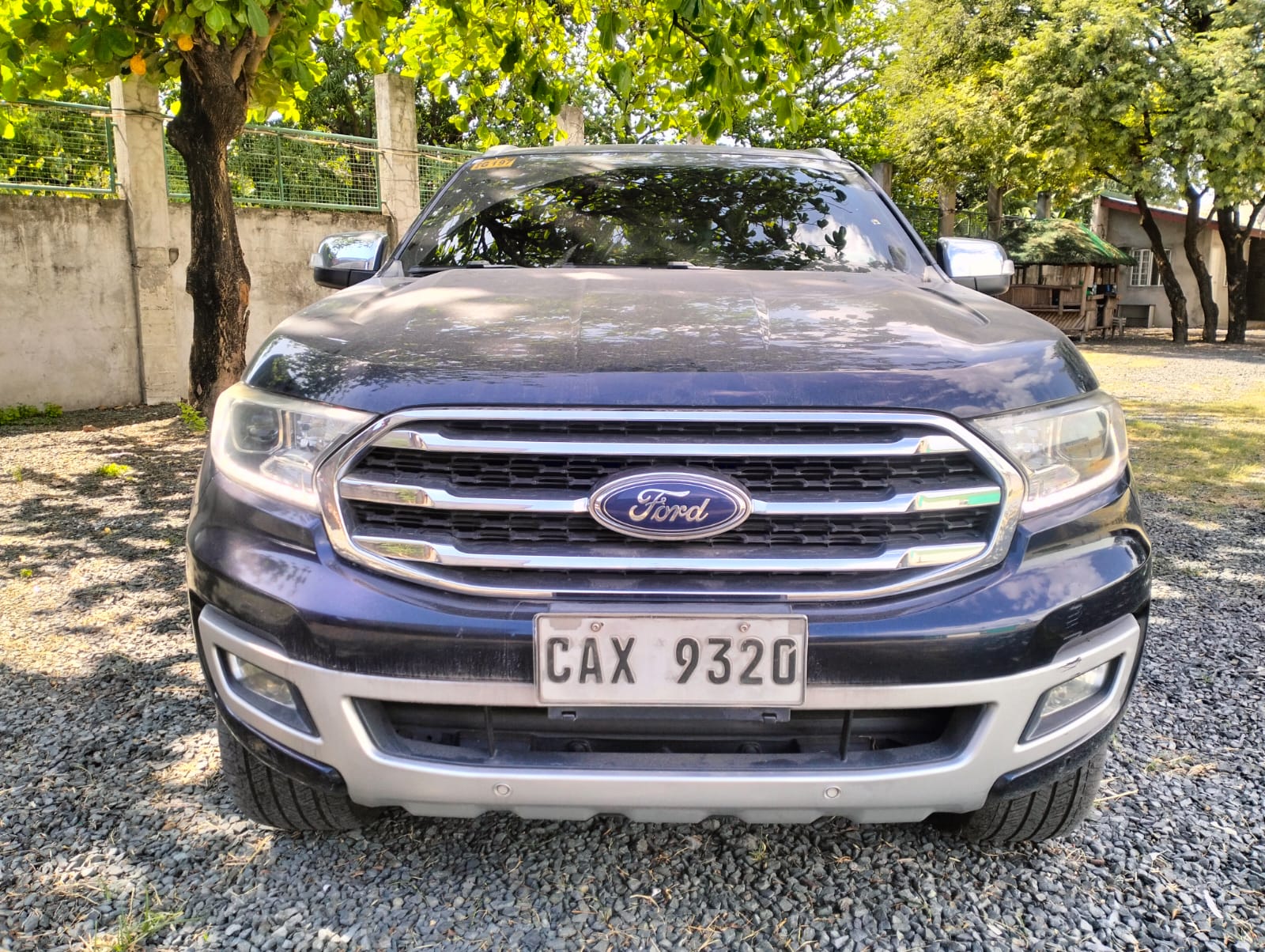
Shopping for a used Ford Everest in the Philippines puts you in good company: it is one of the most cross-shopped midsize SUVs in the country, up against the Montero Sport, MU-X, Terra and Fortuner. This guide covers what the Everest costs second hand, which variant to pick, the problems owners actually report, and the three units currently on our Parañaque lot — priced from ₱335,000.
Why the Everest is a strong used buy · Price guide by year and variant · Trend vs Titanium · Known issues · Flood history and underbody checks · Our Everest stock · Ownership costs · Making a sealed offer · FAQ
Why the Everest is a strong used midsize SUV buy
The Everest you will mostly find second hand is the second generation (sold here from 2015 to 2022). It is a body-on-frame, seven-seat turbodiesel built on the same T6 platform as the Ford Ranger — which means parts, mechanics and service know-how are easy to find from NCR to the provinces.
For PH conditions it makes a practical case: diesel torque for expressway and provincial runs, generous ground clearance, and Ford advertised a wading depth of around 800 mm for this generation — reassuring numbers once the habagat floods start.
Depreciation is the other draw. Early second-generation units now typically ask around half — or less — of what they cost new, so the budget that buys a brand-new small crossover can put a full-size seven-seater in your garage. If you are still comparing nameplates, see our best used SUVs under ₱1 million and our used Montero Sport buying guide.
Used Everest price guide by year and variant
Treat the figures below as typical asking ranges on PH listing sites as of mid-2026 — actual transaction prices are usually lower, and mileage, records and flood history move any unit up or down the band:
- 2015–2016 Ambiente/Trend: roughly ₱480,000–₱680,000 typical asking range
- 2017–2018 Trend: roughly ₱550,000–₱780,000
- 2016–2018 Titanium (2.2 or 3.2): roughly ₱650,000–₱900,000
- 2019–2021 facelift, incl. Bi-Turbo Titanium: roughly ₱850,000–₱1.25M
- 2022 (end of the second generation): roughly ₱950,000–₱1.4M
Our own listed prices sit at or below these bands because every car on our lot carries a guide price and sells through a private sealed offer — no bidding wars inflating the number. The how it works page explains the process in two minutes.
Trend vs Titanium: features worth paying for
Most used Everests in the market are Trend or Titanium. The core diesel drivetrain is shared, so the decision is really about comfort features, engine options and resale — and whether the Titanium's typical ₱100,000–₱200,000 premium over a same-year Trend fits your budget.
| Trend | Titanium | |
|---|---|---|
| Engine | 2.2L 4-cyl turbodiesel | 2.2L (4x2) or 3.2L 5-cyl (4x4); 2.0L Bi-Turbo after the 2019 facelift |
| Transmission | 6-speed automatic | 6-speed automatic; 10-speed with the Bi-Turbo |
| Seats | Fabric (leather on some years) | Leather, power driver's seat |
| Convenience | Touchscreen, reverse camera, cruise control | Adds power tailgate, navigation, keyless entry; panoramic roof on premium versions |
| Best for | Value buyers who want the same mechanicals for less | Long-term keepers who want comfort, 4x4 options and stronger resale |
Exact equipment varies by model year, so check the specific unit rather than the brochure memory. Both our Trends and our Titanium are open for inspection — book a viewing and compare them side by side.
Known issues: transmission, sensors, diesel care
Transmission behavior
The 6-speed automatic on 2.2 and 3.2 units is generally regarded as durable when the fluid has been serviced on schedule. The 10-speed paired with the 2.0 Bi-Turbo after the 2019 facelift is the one owners talk about more — reports of shudder or jerky low-speed shifts are common enough that you should feel for them on the test drive, particularly at light throttle between 20 and 60 km/h.
Sensors and electronics
Typical age-related complaints are minor: parking sensor faults, infotainment glitches and the occasional warning light from a dirty or failing sensor. Most are cheap fixes, but an OBD scan before buying tells you whether you are looking at a ₱2,000 sensor or something deeper.
Diesel care: EGR and DPF
Like most modern diesels, the Everest's engines can accumulate carbon in the EGR system and clog the DPF when used mainly for short, slow city trips — a very NCR-traffic problem. A unit that regularly saw highway runs, with oil changes on schedule and clean fuel, ages far better. Ask where and how the car was driven, not just how far.
Flood history and underbody checks for SUVs
High clearance tempts owners to drive SUVs through water a sedan would avoid — so ironically, flood checks matter more on an Everest, not less. Before offering on any unit, ours included, look for:
- Musty smell, water lines or silt under the carpets and spare-tire well
- Rust on seat rails, seatbelt bolts and under-dash brackets
- Fogging inside headlamps and corroded electrical connectors
- Underneath: frame rust beyond surface level, fresh undercoat hiding repairs, and oil weeping from the transfer case or differentials
- 4x4 units: engage 4H/4L and confirm they shift without drama
All our units are sold as-is, where-is, which is exactly why we encourage a thorough inspection — viewings are by appointment, Monday to Saturday, 9 AM to 6 PM.
Our Everest stock from ₱335k to ₱950k
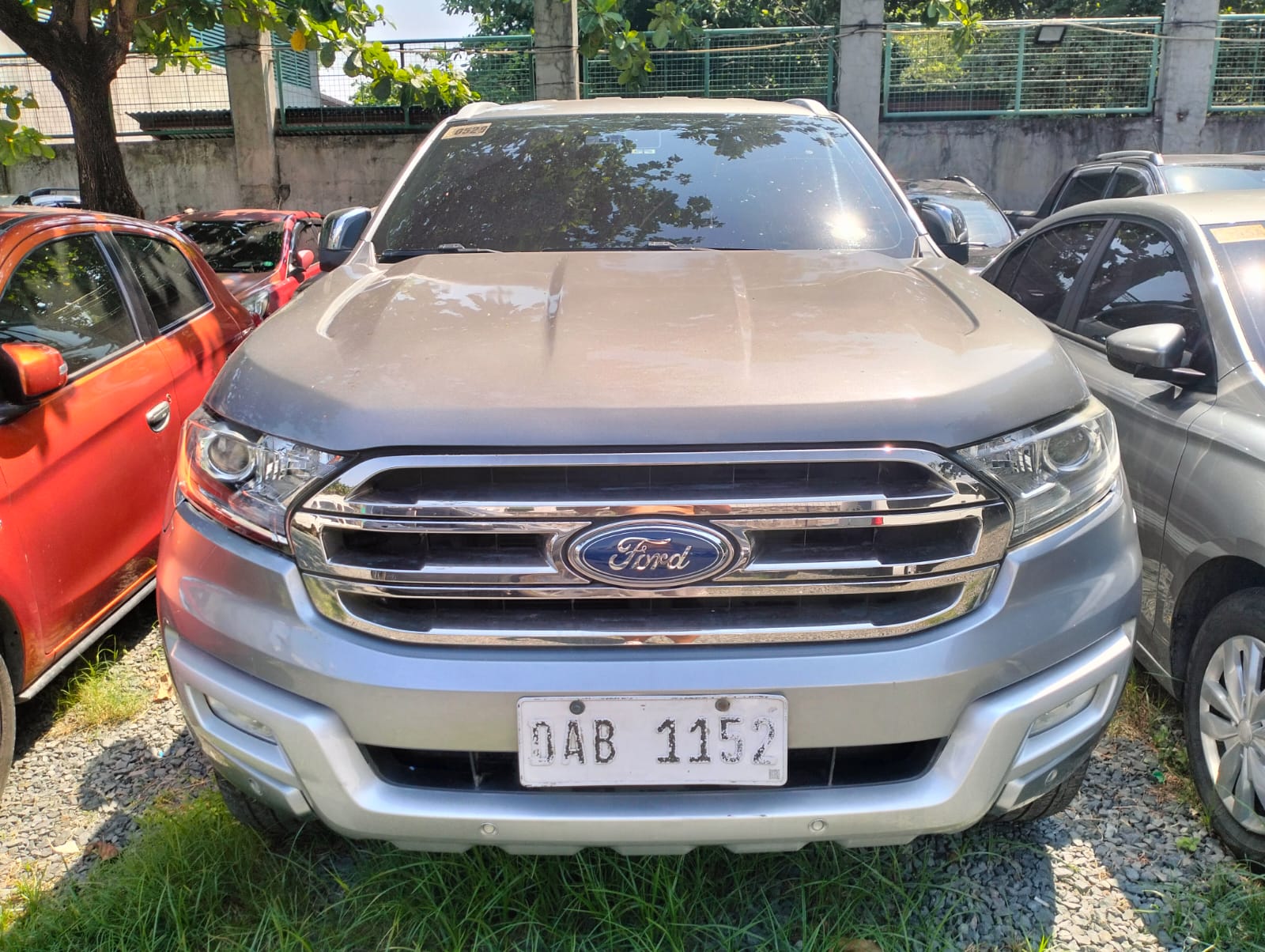
Three used Ford Everest units are live at our Parañaque lot as of July 2026, covering the whole budget spread:
- 2018 Everest Trend AT — listed at ₱335,000 (July 2026), marked down from ₱520,000. The bargain entry into a seven-seat diesel SUV.
- 2017 Everest Trend AT — listed at ₱565,000 (July 2026), marked down from ₱620,000.
- 2022 Everest Titanium AT — listed at ₱950,000 (July 2026), marked down from ₱1,030,000. The last year of the second generation, in the top trim.
Listings move fast at these guide prices, so check the live pages — or see all Everest units currently in stock. If yours sells before you decide, the two Trends also feature in our best used SUVs under ₱1 million roundup alongside solid alternatives.
Ownership costs: fuel, parts, insurance
Fuel: owners typically report around 8–10 km/L in city traffic and 12–14 km/L on the highway from the 2.2 diesel — respectable for a vehicle this size, and diesel is usually cheaper per liter than gasoline here.
Parts: sharing a platform with the Ranger, the country's long-running pickup staple, keeps consumables and common repairs affordable and widely available, including outside Metro Manila.
Insurance and registration: comprehensive cover typically runs around 1.5–2.5% of the vehicle's value per year as market context, and annual renewal fees are set by the LTO — treat both as approximate and get actual quotes.
Financing: our lending partners offer rates from 1.40% per month add-on, subject to credit approval, plus a one-time 6.95% chattel/processing fee on the amount financed. Illustrative only: financing ₱250,000 of the ₱335,000 Trend over 24 months at 1.40%/month works out to (₱250,000 + ₱250,000 × 1.40% × 24) ÷ 24 ≈ ₱13,917 per month; the final rate is subject to credit approval. Details on the financing page.
Making a sealed offer on an Everest
Every car on our lot shows a guide price. You inspect the unit, then make a private sealed offer — it is never shown publicly, so there is no bidding war. We confirm, counter, or accept, usually quickly. Payment is in full before release, and documents (OR/CR transfer) are released two to four weeks after payment. The full flow is on how it works.
Replacing a current car? We also buy cars — fast offer, market-based valuation, and we handle the paperwork, which many buyers use to free up the budget for their Everest.
Book an Everest viewing at our Parañaque lot →
FAQ: buying a used Ford Everest
Is a used Ford Everest a good buy in the Philippines?
Yes, if you buy on condition. The Everest is a body-on-frame, seven-seat turbodiesel SUV that shares mechanicals with the Ford Ranger, so parts and service know-how are easy to find nationwide. It has the ground clearance for flood season and the torque for provincial trips. Because used units are sold as-is, insist on a test drive, a scan for fault codes, and service records before you make an offer.
How much does a second hand Ford Everest cost?
As a typical asking range on PH listing sites, second-generation units run from roughly ₱480,000 for early 2015–2016 examples to about ₱1.4 million for late 2021–2022 Titaniums. Actual transaction prices are often lower than asking. At our Parañaque lot we currently have three: a 2018 Trend listed at ₱335,000, a 2017 Trend at ₱565,000, and a 2022 Titanium at ₱950,000 (July 2026).
What are common problems of the Ford Everest?
Owners most commonly report transmission roughness — shudder or jerky low-speed shifts, especially on the 10-speed automatic paired with the 2.0 Bi-Turbo after the 2019 facelift — plus minor sensor and electronic glitches, and EGR or DPF carbon buildup on diesels driven mostly in short city trips. None of these are deal-breakers on a well-maintained unit; a thorough test drive and a diagnostic scan will reveal most of them.
Which Everest variant is best: Trend or Titanium?
The Trend is the value pick: it uses the same core diesel drivetrain and typically costs ₱100,000–₱200,000 less than a Titanium of the same year. The Titanium adds leather, a power tailgate, bigger-engine and 4x4 options, and stronger resale appeal. If your budget is tight, buy the cleanest Trend you can find; if you keep cars long and want the comfort, the Titanium premium is usually worth it.